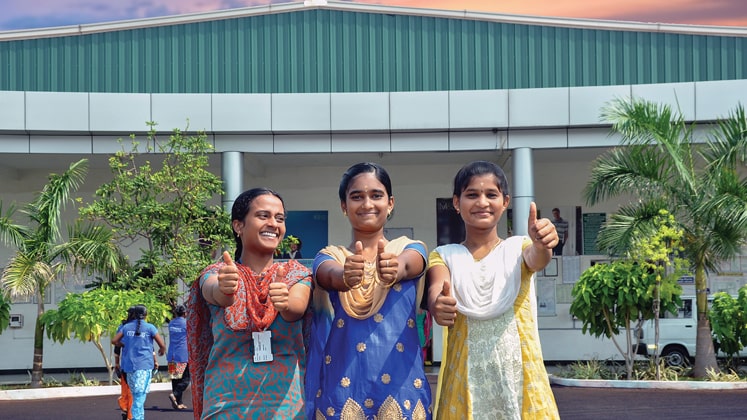
Majority of the workforce across the Indian apparel and textile industry is migratory which is one of the serious concerns of labour issues. There are many reports by national, international NGOs and mainstream media on migrant workers in the Indian apparel industry, and most of them are negative or criticising the industry. Whatever it may be, it is also a fact that majority of the workers, and even many factory owners and senior HR professionals of the industry are not well-informed with the acts related to migrant workers and various schemes for their welfare. And all this is despite that the 2030 Agenda for Sustainable Development recognises for the first time the contribution of migration to sustainable development. But one should not forget that some of the companies are taking this seriously and have taken various steps too, be it counselling or offering hostel facilities. Even leading brands are also actively keeping an eye on these aspects. No doubt, there is a lot more to do but at the same time, conditions are improving too. Apparel Resources explored this issue and tried to get an update as to how the industry is moving in this direction.
Migration is a cross-cutting issue relevant to all of the SDGs. 10 out of 17 goals contain targets and indicators that are relevant to migration or mobility. As per industry assumption, it takes almost 5 years to settle a migrant worker in any established hub (if he continues working in a hub).
As per legal definition, ‘Inter-state migrant workman’ means any person who is recruited by or through a contractor in one state under an agreement, or other arrangements for employment in an establishment in another state, whether with or without the knowledge of the principal employer in relation to such establishment.
Though the issue starts right from responsible migration, but even after proper migration, workers face a variety of challenges which impact their professional growth in a big way.
In some cases, migrant workers work on payroll of contractors who bring them from their villages. In such cases, the workers get exploited by the contractor as well as the factory, especially in terms of under-wage and unaddressed grievances. Women are more vulnerable amongst the migrant workers as they have gender equality, social security issues. Many cases of sexual harassment go unreported. Brands working in this regard accept that organised factories are improving in this direction.

Language is a major issue in case of migrant workers especially in South Indian states where migrant workers don’t understand Kannada or Tamil (languages of Bengaluru and Tirupur respectively). Supervisors and such other senior factory staffs also do not understand migrant workers’ language. All this finally creates misunderstanding among them. Time and again it has been suggested that apparel manufacturers must provide training of local language, at least basic spoken. Various important committees of factories should have at least one worker who can understand both languages.
‘Labor with Liberty’, a report on the female migrant workers in Bengaluru’s garment industry, highlights that local workers largely felt that migrants were more vulnerable to harsh treatment from supervisors than they were, though both groups faced harassment regarding production targets.
In some cases, migrant workers do have comparatively fewer opportunities due to their limited local network. Some of the export houses have such migrant workers in their various committees who can understand local language also. They guide and counsel their new colleagues and motivate them too. Instructions written in migrant workers’ language is also a common practice in some factories.
Various stakeholders have taken some initiative regarding promoting responsible migration in the garment supply chain. They are working for policy advocacy, organising seminars and workshops too. AIDER NGO, Change Alliance, M&S and British High Commission are few companies that are working collectively, conducting surveys to understand better the issue as well as solutions.
Legal support
Inter-state Migrant Workmen (Regulation of Employment and Conditions of Service) Act 1979 lays down that migrant workers must get timely wages equal or higher than the minimum wage, provide suitable residential accommodation, prescribe medical facilities, protective clothing, notify accidents and causalities to specified authorities and kin. It also says that it shall be the duty of every contractor to furnish such particulars and in such form, as may be prescribed, to the specified authority in the State from which an inter-State migrant workman is recruited and in the State in which such workman is employed, within 15 days from the date of recruitment, or, as the case may be, the date of employment, and where any change occurs in any of the particulars so furnished such change shall be notified to the specified authorities of both the States.
It also says to issue to every inter-State migrant workmen a passbook affixed with a passport sized photograph of the workman and indicating in Hindi and English languages, and where the language of the workman is not Hindi or English, also in the language of the workman. The act also talks about displacement allowance and journey allowance for such workers.
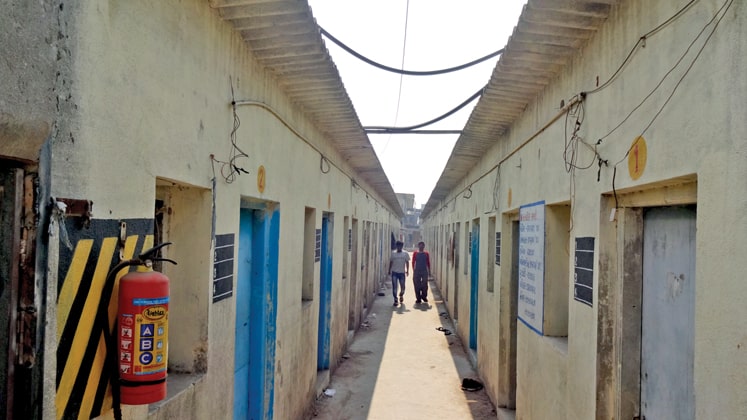
The Inter-State Migrant Workmen (Regulation of Employment & Conditions of Service) (Karnataka) Rules, 1981 state that establishments employing migrant workmen must register with the relevant authority. In practice, this authority is the labour department. Industry experts strongly feel that this act needs to be followed and monitored seriously.
Reverse migration
Most of the hub depends on migrant workers, but the growing industry at established hubs like Kolkata and emerging hubs like Jharkhand, Orissa is supporting reverse migration. Low-cost livings, opportunity to live near or with their families are also important factors in this regard.
Unorganised sector: A big worry
There are lakhs of migrant workers occupied in Surat (Gujarat), Gandhi Nagar (Delhi) and few other such hubs across India. Though a major chunk of them is making a reasonable amount of money, their working as well as their living condition are comparatively more challenging as there is very less or no compliance at all. A lot of workers do prefer to work in such areas as they feel comfortable here compared to organised factories. In Delhi, during the season, an experienced worker makes Rs. 25,000 to Rs. 30,000 monthly but their working conditions really need to improve. But lack of support and proper monitoring from local administration, and basic infrastructure are missing in unorganised areas which ultimately affect workers too.
Skill development
More or less, agencies involved in skill development fail to register long-distance migrant workers with the Labour Departments in the state of origin and the destination state. It is suggested by various international NGOs and bodies that the respective State Governments and the Union government must ensure that all trainees at skill development agencies implementing the Skill India initiative are registered both in the state of origin and the destination state (Karnataka), in compliance with the Inter-State Migrant Workmen Act, 1979.
Buyers’ support
Many of the leading brands have so far not developed policies on migrant workers and factory-controlled hostels. They neither do audits of the hostels nor monitor them. On the other hand, some popular brands like Decathlon, Gap and PVH also monitor hostels for the workers while Gap has encouraged suppliers to set up hostel committees.
State’s centres
- Almost ayear and a half ago, Odisha Government opened migration support centre for Odia workers in Tirupur
- The Bihar Government has a separate budget for such migrantworkers
Community level
Be it higher cost of living or poor condition at the areas where majority of migrant workers are living, efforts of civil societies are very much required as these areas are not in reach of garment manufacturers.
The Dhaka Principles for Migration with Dignity
Based on the UN Guiding Principles on Business and Human Rights and international labour and human rights standards, The Dhaka Principles for Migration with Dignity is a set of human rights-based principles to enhance respect for the rights of migrant workers from the moment of recruitment during overseas employment and through to further employment or safe return to home countries. The Dhaka Principles provide a roadmap that traces the worker from home to place of employment and back again and provides key principles that employers and migrant recruiters should respect at each stage in the process to ensure migration with dignity.
Migrant workers preferred
- Less absenteeism in day-to-day working
- Comparatively more dedicated and disciplined