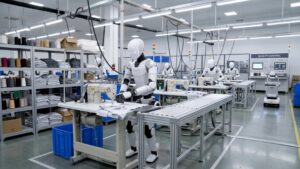
Unlike most industry stalwarts who fear that rise in wages is a threat to the industry’s competitiveness, Md. Shamsul Alam, Managing Director, AKH Group, seems quite comfortable with the change as he says, “This is a policy decision and we have to follow it. It is certainly having an adverse effect, but that’s a part and parcel of business, and we have to device new ways to remain profitable. While, we are urging buyers for extra price, at the same time, we are also planning for more automation to minimize the need of the workers.”
With a turnover of US $ 160 million, AKH Group is in no hurry for expansion as of now. “We will not be adding any new factories, but rather concentrating on consolidating the operations in our existing units. Our focus is to increase the efficiency of our units to improve our profitability,” says Alam.
Breaking free from the stereotype of manufacturing basic garments, AKH Group has invested in value adding machines like printing and embroidery besides producing most of the trims used in-house to support its R&D efforts to give its buyers ‘value’. The company started by three friends in 1997 as a 3 line shirt factory, today houses 1600 machines under its roof, running in 41 lines at 6 different units. “We have a vast variety of apparels in our portfolio, from shirts to ladies high-fashion garments to knits. In spite of continuing with T-shirts, often referred to as a basic product we intend to make more garments that involve value addition. We are experimenting with fabrics; and other than cotton we are using a lot of mixed yarns like cotton-viscose and bamboo. In the knitted segment we can manufacture up to 26 gauge fine knitted fabric,” he shares.
Working mainly with the European market, producing for the likes of M&S, Van Heusen, Celio, Benetton, H&M and Gap, the company is manufacturing both woven and knitted garments in a fully vertically integrated setup, excluding spinning. “We are producing more or sometimes less, everything other than interlining or metal products. We make poly bags, sewing thread, buttons, labels and all the plastic items for shirts like butterfly, back bone, boxes,” informs Alam, who attributes the consistent growth of the company to the ability to gauge market trends and what customers need. “Compared to other factories, we are spending a lot of money on developments. We are researching and investing in new quality of yarns and fabrics, which has found appreciation from our buyers as it falls in line with their forecast. Because of all this we offer our buyers exclusive designs and thus they stick to us,” reasons Alam.
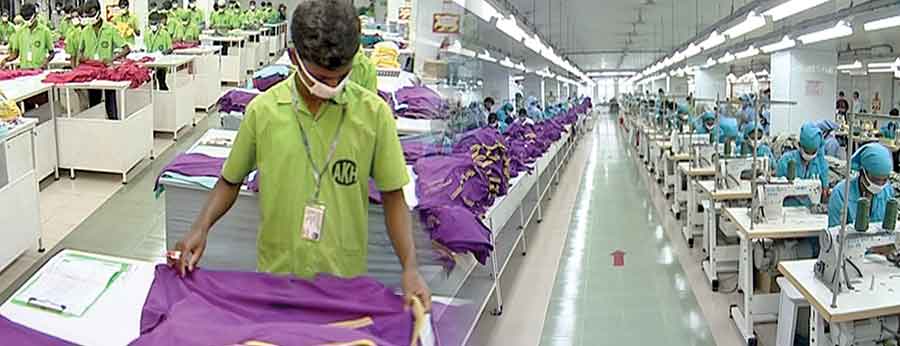
Significantly, AKH is registering growth in both the knits and woven segment. “In the woven category, the customer is coming to us for the quality that we can give even in high volume runs. We have established a reputation worldwide as a premium dress shirt manufacturer. At the same time, the knit products are making their way into formal landscape with people now wearing polo neck shirts to work instead of a formal shirt, which is further widening the knits market,” says Alam.
Bangladesh is seeing unparalleled enthusiasm to go ‘Green’ in recent times. However, Alam claims that AKH has always worked on sustainable lines. “We have machines to trap steam coming out of the generators, thus saving energy in the use of boilers. I believe making such changes in our existing unit is much more viable than to setup a ‘Green’ factory from scratch as land and power is too difficult to get,” he argues.
Alam is very optimistic about the future of the country because he knows well that Bangladesh is the only country that can still deliver on time at a price desired by the buyers. Trained by the Japanese and the Koreans, this industry has a very long experience in running the sewing industry. In spite of the wage hike, it is still amongst the cheapest destinations to source apparels from, and the countries which are presently cheaper than Bangladesh, do not have the same infrastructure to cater to the quantities demanded.