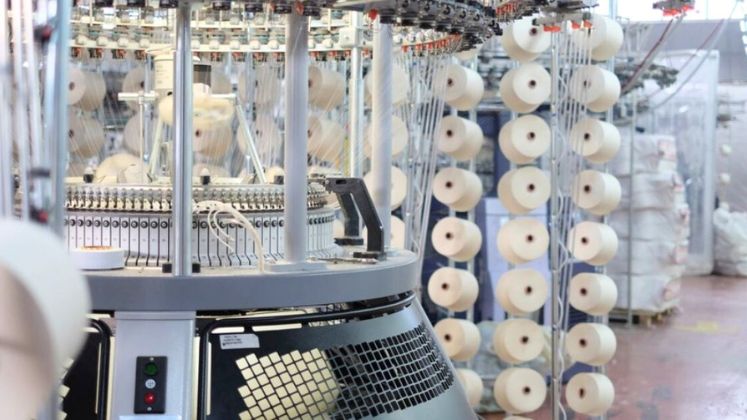
The minimum import price (MIP) on all HS lines of Chapter 60, which includes all varieties of knitted and crocheted fabrics, has been called for by the textile sector in India. The present MIP on five HS lines expires on 15th September 2024, therefore the Government is anticipated to make a decision soon.
In a letter addressed to the Ministry of Textiles, numerous businesspeople and industry associations contended that, despite the MIP on some types of knitted fabric, imports of knitted fabric had not decreased during the past six months. Regarding the particular HS lines at the 6 or 8-digit level for which an extension or imposition of MIP is being sought, the ministry has requested opinions.
Confederation of Indian Textile Industry (CITI) said in a letter sent to the ministry, “Since the imposition of the MIP of US $ 3.5 per kg, there has been a considerable increase in the imports of fabric varieties under other HSN codes at a reduced unit price. Same is evident from the fabric import data from Apr-June 2024 as compared to Apr-June 2023.”
Industry input indicates that a substantial volume of fabric was being imported under Chapter 6006, when it should have been categorised under other chapters, because all knitted fabric categories were previously subject to the same duty structure. The present unit import costs for fabric categories are detrimental to the local business and are not feasible domestically, especially under HSN 6001 and 6005. In order to bolster the domestic market, the Government had to think of prolonging the MIP past September 15, 2024. Additionally, all knitted fabric categories under HSN 6001, 6002, 6003, 6004, and 6005 must be subject to the US $ 3.5 per kg MIP.
Numerous industry associations have also written to the Government to advocate for this proposal, including the Punjab Dyers Association, the Federation of Surat Textile Traders Association, the North India Textile Mills Association (NITMA), and the Southern India Mills Association (SIMA). Many businesspeople have also advocated for limits on the import of textiles, arguing that the massive oversupply of textiles at reduced prices has hurt domestic markets, particularly at a time when developed economies’ demand for textiles is slowing down globally.





 Bharat Tex Special Report 2026