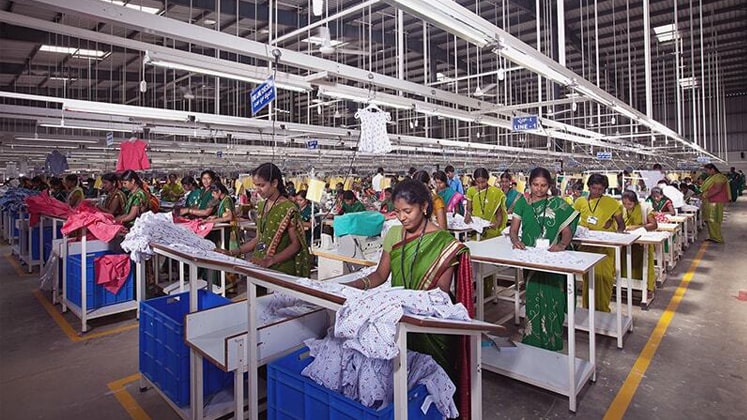
As the Indian textile apparel industry continues to face the massive challenge of high cotton price, various prominent trade bodies have urged the Government to make cotton stock declaration mandatory and allow 40 lakh bales of duty-free import of cotton.
Owing to the high cotton price, orders from US-based brands have started declining.
In a joint Press Meet at SIMA Conference Hall, Coimbatore, T.Rajkumar, Chairman, Confederation of Indian Textile Industry (CITI), Ravi Sam, Chairman, The Southern India Mills’ Association (SIMA) and Raja M. Shanmugam, President, Tirupur Exporters’ Association (TEA) raised the grave situation faced by the entire cotton textile value chain across the country.
The severe impact of continuous increase in cotton and cotton yarn prices on the ready-made garment exports, especially from Tirupur cluster,as well ason made-ups’ exports from different clusters were also highlighted in the Meet.
The Ukraine-Russia war has added fuel to the situation with a steep increase in oil prices by 30 per cent to 40 per cent,which has impacted the European economy thereby resulting in reduced demand for exports.
The trade bodies also said that the predominantly cotton-based textile industry is facing a long drawn recession on cotton front as the cotton price has increased from Rs. 44,500/- per candy in February 2021, when 11 per cent import duty was levied on cotton, to Rs. 90,000/- per candy now.
It is feared that the industry might face cotton shortage during August to October resulting in industrial unrest.
There is no reliable data available regarding the stock maintained by the kapas traders, ginners and cotton traders.
In the case of spinning mills, only around 40 per cent of the mills provide data to the office of the Textile Commissioner.Therefore, the cotton traders are hoarding the cotton and speculating the price on a daily basis taking advantage of futures trading in MCX and NCDEX.
Though the cotton prices occasionally move in tandem with international price, quality cotton is not sold and mills start facing shortage. Consequently, the industry has been demanding to withdraw the 11 per cent import duty to have a level playing field, sustain the export performance and compete with the cheaper imports from countries like Bangladesh.
The spinning mills are currently having only 40-day stock (41 lakh bales) as against 3 to 6 months’ stock level maintained by spinning mills during any cotton season at the end of March, as over 90 per cent of the cotton arrive at the market during December to March.
Only around 240 lakh bales of cotton have arrived at the market as against 320 lakh bales that should have arrived by this time. Unlike the international cotton trade, especially New York Futures, in India few traders speculate the price on a daily basis without any physical transaction.





 Bharat Tex Special Report 2026