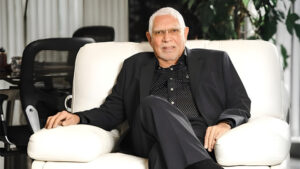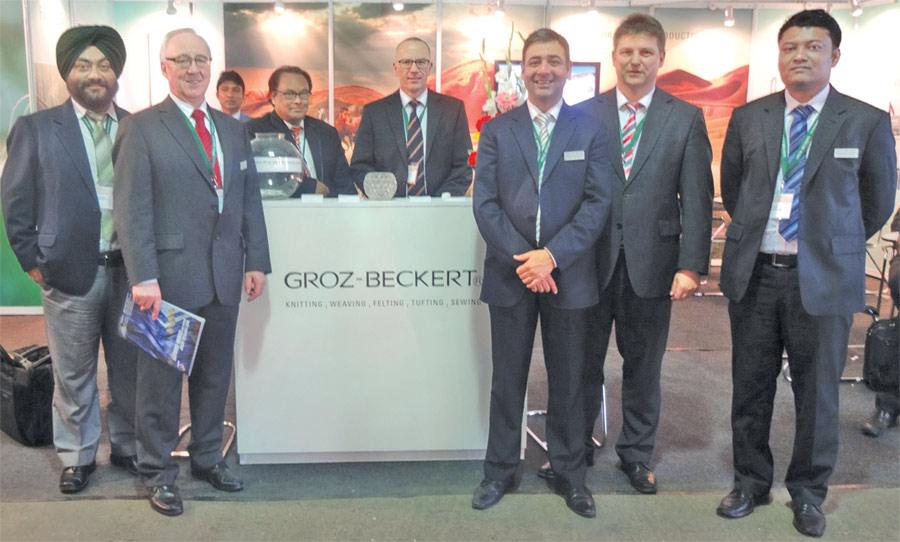
Over 900 exhibitors from 32 countries, 30,000 visitors and US $ 200 million worth of onsite order bookings, are some of the key facts that define the success of the 2015 edition of Dhaka International Textile and Garment Machinery Exhibition (DTG).When the PM defined US $ 50 billion target for the apparel export industry to be achieved by 2021, it was also a call to the mushrooming textile manufacturing sector of the country, which is catering majorly to the apparel exporters to expand. “The local textile mills currently satisfy around 85% of the fabric consumption needs of knit factories and 40% of the same for woven garment factories. Over one-third of the US $ 16 billion worth of fabrics and yarns currently used by the apparel sector are still imported. Hence improving backward linkages can both reduce foreign exchange pressures and boost productivity rates of apparel factories,” said Tapan Chowdhury, President, Bangladesh Textile Mills Association (BTMA) at the inauguration ceremony of the DTG fair, which was also marked by the presence of Abul Maal Abdul Muhith, MP and Finance Minister. Most of the participants were satisfied with the response of the exposition and 95% of the exhibitors showed interests in participating at DTG 2016.
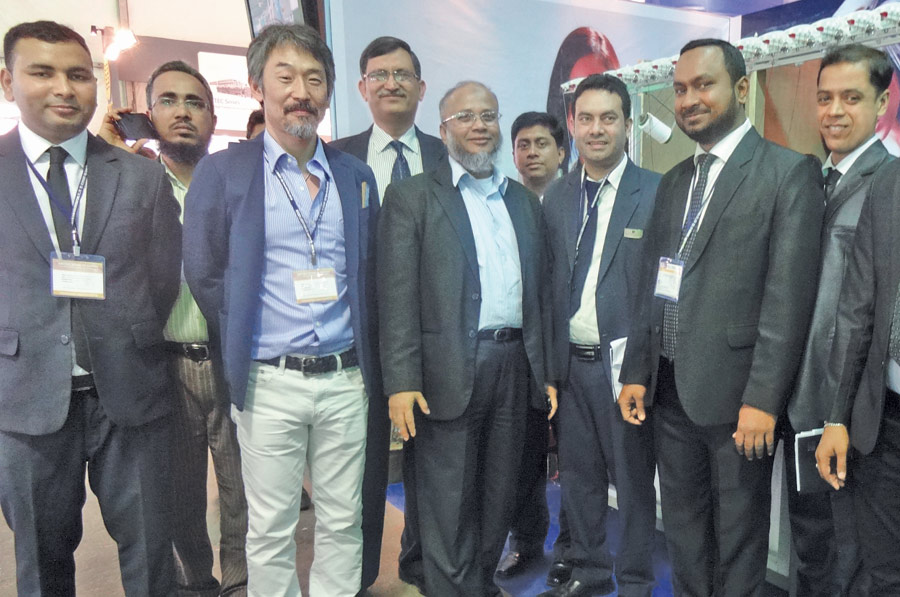
The exhibitors of the DTG fair were catering to the needs of yarn, fabric (production and processing) and sweater manufacturers. The showcase of technologies for spinning, weaving and knitting was complete with the presence of companies such as Reiter, LMW, Picanol, A.T.E. to name a few, all looking at increasing their share in the surging textile industry with 9 million spindles currently running in 400 spinning mills. Reiter, the market leader in this segment, is being given tough competition by Laskmi Machine Works from India because the latter claims to have spinning machines with equivalent built quality and performance at much lower prices.
The technology providers urged the spinning mills to increase the average spindle speed, as it presents a win-win situation since the manufacturers will be able to increase their output from the same equipment while the technology providers will be able to provide high performance equipment required for higher spindle speeds. “Due to the lower spindle speeds in the country, Chinese technology providers have found success in Bangladesh, unlike India where the spindle speeds are much higher,” points out Vikas Sharan, Vice President, A.T.E. Enterprises. Highlighting other reasons responsible for lower spindle speeds, C. Arunachalam, GM – Exports, Lakshmi Machine Works states, “There is a grave absence of skilled manpower in the country for managing spinning units, which is equally necessary for maintaining high spindle speeds.” Another concern was the absence of allotment of gas connections to new textile units for some time now, due to which technology providers have to majorly depend on consumables for spinning equipment, for revenue generation.
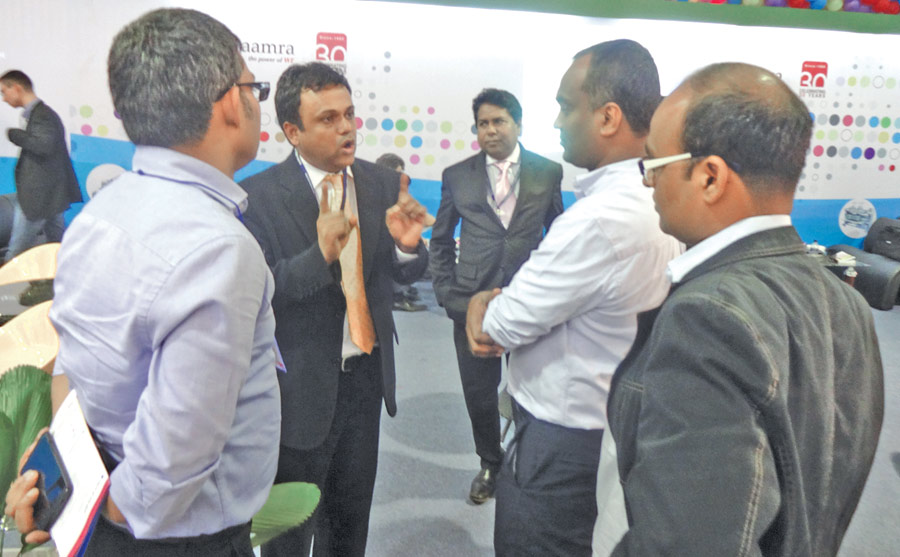
Unlike the looms segment, undoubtedly dominated by Toyota and Picanol, the segment of circular knitting machines is again undergoing segmentation with the top 100 apparel manufacturers investing in machines from companies such as Santoni, Mayer & Cie, Fukuhara, Terrot, etc. and the rest continuing to invest in circular knitting machines from China, which have been a favourable option of the country for a long time. The shifting interest in better technology is backed by the increasing focus of the apparel manufacturers on quality consistency, lower consumption of spare parts and higher output, aspects that are defined by the ‘make’ of parts such as sinker and needle used in the machines. Having recognized the same, Fukuhara is today among the market leaders with more than 1,000 circular knitting machines installed in the country because the critical parts of the circular knitting machines are manufactured in Japan and only the yarn feeders are sourced from Germany-based Memminger Iro. “Bangladesh is our largest market and we are competing with European circular knitting machines in terms quality and output,” says Akihiro Konishi, Manager of West Asia Section, Fukuhara.
Santoni has already registered success with its range of circular knitting machines and is now penetrating the market with its range of seamless knitting machines with the first installation in Urmi Group and 6 more projects in the pipeline.
Similar is the case with Santoni that has already registered success with its range of circular knitting machines and is now penetrating the market with its range of seamless knitting machines. “We have already done our first installation in Urmi Group and there are 6 more projects in the pipeline,” shares Gianpiero Valsecchi, Area Sales Manager, Santoni, who believes that seamless knitwear is the next growth area for Bangladesh as the product category is moving out of China.
The showcase of technology providers for manufacturing sweaters was highlighted by the presence of companies such as Shima Seiki, Cixing, Stoll, Guosheng, etc. and each one of them confirmed the strong growth in demand for flat knitting machines, a trend that has been prevalent for the past 3 years. “We sold a total of 5,000 flat knitting machines in the last 4 years, and have started the year 2015 on a positive note by having sold 700 machines in the month of January only,” shares Zalal Uddin Tuhin, Managing Director, Cixing Bangladesh Ltd. But success has only been achieved by companies which have focused on training and skill development of knitting operators. On the same lines, the Japanese pioneer Shima Seiki has installed a movie clip in some of its flat knitting machines, which details maintenance procedures like needle change and machine oiling. “This video if played on the production floor will ensure that operators are skilled enough to take on the roles of technicians as well. It will ensure that they don’t have to call the boss, the technician or the programmer and hence reduce downtime as well,” avers Tadanori Ueno, General Manager – Bangladesh Liaison, Shima Seiki.
Fukuhara is today among the market leaders with more than 1,000 circular knitting machines installed in the country because the critical parts of the circular knitting machines are manufactured in Japan.
With most of the company’s touting Bangladesh as their second biggest market, companies such as Stoll are confident that the country will become its biggest market in the times to come.“When I became responsible for the Bangladesh market 7 years back, the country was nowhere on Stoll’s global map but now it is 2nd to China and I see it becoming the biggest market in the coming years,” concludes Thomas Hoffman, Area Sales Manager, Stoll, summing up the sentiments of most of the exhibitors at the show.
1) Eastman TechnocraftS – A complete denim jeans manufacturing solution provider
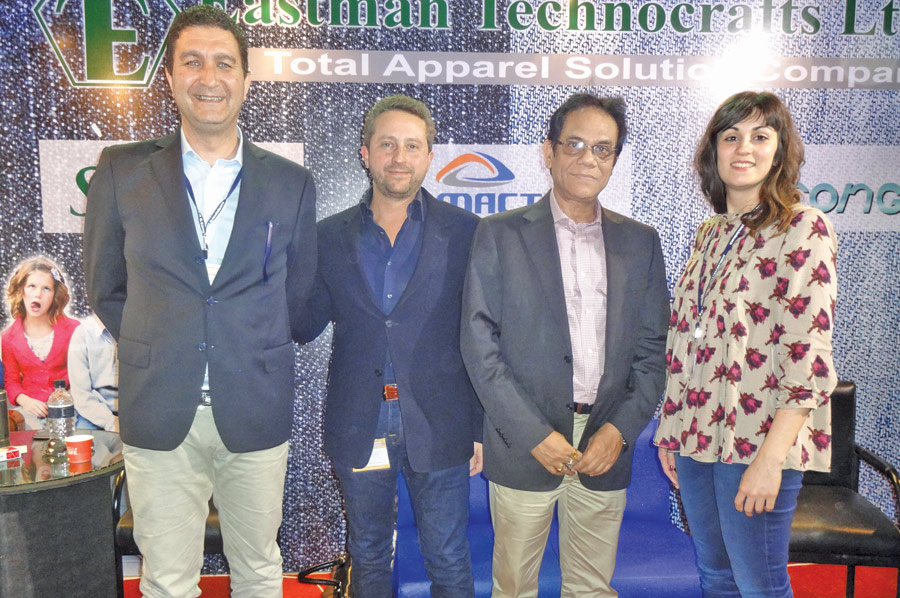
In a market with solution provider having a complete ‘one-stop shop’ product portfolio, veterans such as Eastman Technocraft have gone a step ahead and created a technology portfolio for catering to all the needs of a denim jeans manufacturers – starting from the cutting & spreading machines from Morgan Tecnica, sewing automats from Sipami, washing and garment dyeing machines from Brongo, and dry processing machines from Mactec and Jeanologia. “Denim jeans as a product has consistently grown in Bangladesh and we are helping the industry move up the value chain by providing a hand-picked set of technologies for the product,” avers Manik Chowdhury, Managing Director, Eastman Technocrafts. Participating at the DTG fair, Eastman’s booth showcased sewing automats from Sipami, which as claimed can reduce 50% of the manpower in a denim jeans unit producing 5,000 jeans per 10 hours.
Another high-end technology offered by Eastman is that of Jeanologia, for laser finishing, ozone processing and washing. The machines from Jeanologia are utilized majorly for giving a washed and vintage look to the denim jeans, while maintaining their soft hand feel. “We have already installed 130 laser dry processing machines from Jeanologia in Bangladesh because there is just no competition to this technology. At the DTG, we sold 2 laser machines and one ozone machine to Armana Group,” shares Manik. Companies such as Armana have 13 machines from Jeanologia, Pacific Jeans has 22 laser machines from Jeanologia, Standard Group has more than 7 such machines, Hameem Group has 12 such machines, Regency has 7 machine, Tusuka Group has 11 machines and Opex Group has 8 machines. “Although we have 7 technicians dedicated for Jeanologia and the company has its own office in Dhaka, the machines can be repaired from Spain through remote diagnostics,” adds Manik and asserts that none of the 130 machines installed in Bangladesh are non-operational.
“A proof of our machine’s competence is the Japanese buyer Uniqlo recommending garment dyeing machines from Brongo to its vendors like Noble Hurricane Group, which bought machines from Brongo based on the recommendation of Uniqlo.” – Beatrice Brongo
In value additions, maximum demand is for garment dyeing, for which Eastman Technocraft has washing machines from Italian pioneer, Brongo. “The difference lies in the motion in which garments are moving inside the washing machines – in a regular washing machine, the garments go to the top and then fall towards the bottom in a circular motion, which causes damage at the hemlines of the garment, but in case of compartmental dyeing machines, the garments move in a semi-circular path, i.e. they do not fall from the top,” explains Beatrice Brongo, Finance Manager, Brongo. The machines from Brongo are suitable for dyeing knits and denim jeans with Lycra content. “A proof of our machine’s competence is the Japanese buyer Uniqlo recommending garment dyeing machines from Brongo to its vendors like Noble Hurricane Group, which bought machines from Brongo based on the recommendation of Uniqlo,” she adds. The recent modifications done in Brongo machine have significantly reduced the water consumption.
2) Vibemac helping Bangladesh in moving up the value chain with suitable automation

Leading the automated sewing solutions for denim was seasoned industry veteran and Italian giant Vibemac, exuding with an air of confidence at the show. Enrico Guerreschi, Sales Director, Vibemac while interacting with Team Apparel Online at DTG says, “The industry will bounce back in no time,” referring to the ongoing political impasse. Vibemac has created a niche for its solutions in the Bangladeshi market with installations in factories like Pacific Jeans, Universal Jeans, Opex Group, Ha-Meem Group, Mahmud Jeans, Kenpark, Regency and Ananta Denim.
Displaying immense confidence in jeans manufacturing capabilities of the country, Enrico sees the Bangladeshi industry getting better with the product in terms of sewing and washing with every season. “One of our customers, Pacific, is working on 14 ounce selvedge denim imported from Japan. This is premium of the premium. It does not get better than this and it is made in Bangladesh,” asserts Enrico. Present in the country since 1997, Enrico shares that a gamut of performance-oriented machines and a reliable network of spare parts supply have kept the Italian company going from strength to strength in Bangladesh. “At the same time we are training our technicians at our Italy headquarters every year. It has ensured that our customers are happy and buying more of our machines,” he concludes.
The Vibemac booth attracted many visitors for its 4650EV9R automatic belt loop setter promising better efficiency and quality than its earlier versions. The latest machine is now equipped with a completely new 7 inch coloured touch screen panel, which the company claims is the most user-friendly computer panel. The new CPU with newly developed software by Vibemac assures a much better software management, a better seam quality, easier adjustments and patterns, more precision, more customizable and more fashion options. Also equipped with a new presser foot providing extra pressure and less flexure, and a lower barycentre, the sewing automat is a mile ahead of competition. The new loop alignment system avoids loop mispositioning on the waistband, especially for the folded tail loops. Vibemac has many more key machines for jeans in its portfolio such as the V800AS serging machine, V300 waistband attaching machine, 1010V4 DCS automatic back pocket decoration machine, 2516V4 automatic back pocket setter and 3022BHE bottom hemming unit.
3) ZSK certain of success in the quality-conscious Bangladesh market
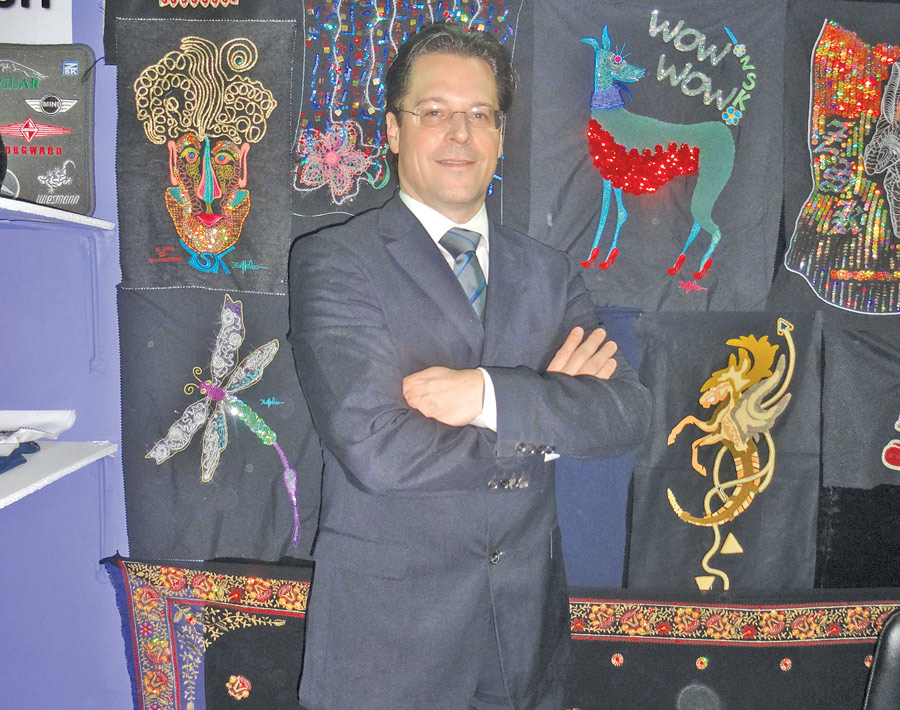
Founded in 1984, ZSK from Germany has created a niche for itself in a highly competitive market. Having already established a stronghold in Pakistani ethnic wear market and Indian home furnishing sector, the company has now entered Bangladeshi market with the technology agent Terrot Bangladesh, which is also the sole agent of Terrot knitting machines. Appreciating the importance that Bangladeshi market puts on quality, Frank Giessmann, Sales Director Asia, ZSK Stickmaschinen GmbH says, “The Bangladeshi industry is not bothered about cheap embroidery machines, because they are aware of the poor quality they produce. This market reveres quality and thinks in long term.”
Exhibiting at DTG-2015, the company had a versatile line-up sample prepared on two different embroidery heads – W-head and K-head. Both are special heads with only one needle. The K-head is a special embroidery head for chain and chenille embroidery. An automatic colour changer for 6 different thread colours helps to introduce even more varieties and flexibility. It has 4 single motors allowing the individual variation of the needle, presser foot and the way the thread is fixed on the material. The W-head is a special embroidery head, which is able to embroider a vast number of special threads, ribbons, and cord at lower costs with continuous high quality. All special embroidery machines can be equipped with sequin devices. The W-head makes application of special threads possible. The special thread is fixed next to the head on a roll which can freely move with the head. Depending on the mode, the thread can be moved in different directions.
4) Shima Seiki lays emphasis on developing skilled workforce; unveils solutions for heavy knits

Shima Seiki, the recognized comprehensive flat knitting technology solution provider was present at DTG with Pacific Associates, its channel partner for Bangladesh. The company’s agenda at the fair was synonymous with its reputation of offering technologies and interventions that have time and again guided the future of the knitting industry. One such point of emphasis was skilling the knitting industry operators. Although Bangladeshi apparel manufacturing industry enjoys unquestionable lead on the global scale, high man-to-machine ratios continue to be the country’s Achilles’ heel. “While it is possible for one operator to control 10 machines, the figure is as low as 2 in a large number of Bangladeshi factories. This mainly stems from the fact that skilled labour is still a rarity in the country,” points out Tadanori Ueno, General Manager – Bangladesh Liaison, Shima Seiki.
Shima Seiki provides training modules for machine technicians, and names like Pioneer Sweaters have already benefited from the program. The company’s next step in this direction is a movie clip, scheduled for a mid-March launch, which details maintenance procedures like needle change and machine oiling. “This video if played on the production floor will ensure that operators are skilled enough to take on the roles of technicians as well. It will ensure that they don’t have to call the boss, the technician or the programmer and hence reduce downtime as well,” avers Tadanori. Shima Seiki machines have control panel in Bengali, which the company claims is more accurate in its translation compared to other machine manufacturers. Unfazed by the ongoing tense national situations Tadanori is confident of the country’s recovery and is looking at maintaining the growth registered in the previous year. “Bangladesh continues to be our second most important business destination,” he further emphasizes.
Shima Seiki’s next step in the direction of training is a movie clip, scheduled for a mid-March launch, which details maintenance procedures like needle change and machine oiling. This video if played on the production floor will ensure that operators are skilled enough to take on the roles of technicians as well.
Shima Seiki showcased its wide range of machines for fine and heavy gauge applications. A part of this was the NSES122CS computerized flat knitting machine with coarse gauge capability and videos for machine maintenance. The “CS” in the name stands for “Compound-Sinker” formulated from Shima Seiki technologies of compound needles and spring-type sinker system. Compound needles ensure short stroke and patented spring-type sinker system, greatly increasing pattern variety. The machine’s R2CARRIAGE ensures that less space is required for the carriage to make returns on the knitting bed, allowing more area for the carriage to run at full speed yielding significant productivity increases. Further racking for loop transfer is performed by both front and rear beds simultaneously in two directions, reducing total racking movement by half resulting in compact machine size, better racking control and knit capability.
Outfitted with Digital Stitch Control System (DSCS), NSES122CS continuously adjusts yarn feed and tension for loop consistency (tolerance +/- 1%) guaranteeing quality control and consistency among different batches and repeat orders. Alongside this machine, live demonstrations were also held on SDS®-ONE APEX3, a specialized hardware/software system from Shima Seiki.
5) A.T.E. confident of supporting Bangladesh with its wide range of textile equipments, spares and consumables
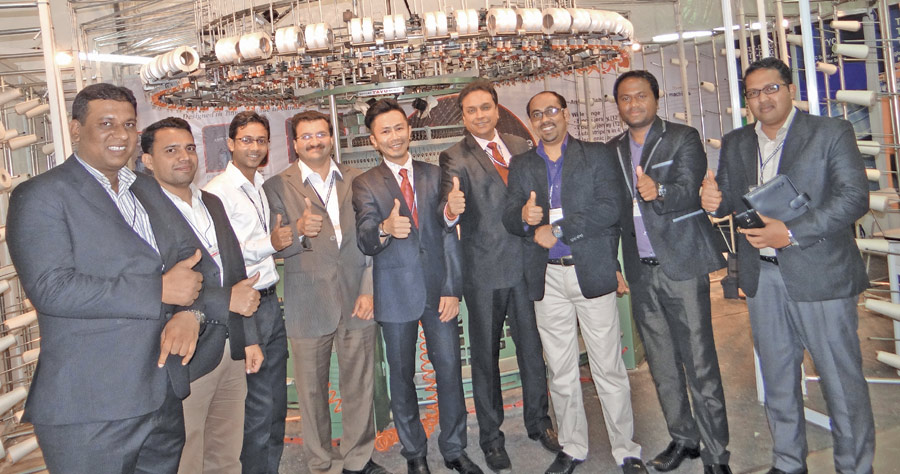
With about 7 decades of experience in supporting, servicing and upgrading the textile and apparel industry in India, makes A.T.E. not only the most experienced and preferred, but also the largest and most organized solution provider to the textile, non-woven, carpet and apparel industry. Present in Bangladesh for more than 22 years, A.T.E. formally established A.T.E. Technologies Bangladesh Pvt. Ltd. in 2005 with local sales force, technicians and managers. “Strong local presence in Bangladesh was necessary to gain the trust of the industry and be able to take bigger projects,” says Vikas Sharan, Vice President – Knitting, Synthetics, Non-Woven & Carpets, A.T.E. Enterprises, whose presence at the DTG fair highlights the optimism and dedication of the company’s top management towards Bangladesh market. A.T.E.’s product portfolio for the Bangladesh market includes Zinser (speed frames), Elgi Electric (overhead travelling cleaners and yarn conditioning system), Tayu (circular knitting machines), Teraspin (spindles, drafting systems and other spares) and MAG (lab equipment) to mention a few. “Bangladesh textile industry runs its equipment at comfortable speeds, which explains the influx of Chinese equipment here based on price performance,” explains Vikas. Such speeds have also required A.T.E. to strategize their business in consumables and spare parts such as top rollers, spindles, etc. from Teraspin. The machines and parts that we offer in Bangladesh are all suitable for higher speeds, which makes us ‘preferred’ suppliers here,” opines Vikas.
“Bangladesh textile industry runs its equipment at comfortable speeds, which explains the influx of Chinese equipments here based on price performance. The machines and parts that we offer in Bangladesh are all suitable for higher speeds, which makes us ‘preferred’ suppliers here.” – Vikas Sharan
At the recently concluded DTG fair, A.T.E. exhibited the TY-S30-OW122 circular knitting open-width machine from Tayu, which received much appreciation for its structure, design and speed from Bangladesh customers and even got a good number of bookings. Working on a range of fabrics like plain jersey, pique fabrics, all four track designs and Elastane fabric, this machine also provides an option for three thread conversions. It has a fairly compact open-width frame with lesser operating height. “Tayu has been one of the recent additions to our rich product portfolio in Bangladesh. We are also promoting at selling Zimmer, a digital printing solution provider, to the Bangladesh market because value addition and faster turnover is picking up in the country,” shares Vikas.
Circular knitting machines from Tayu and yarn conditioning system, overhead travelling cleaners for speed frames, ring frames and auto-coners, and bobbin transport systems from Elgi Electric are some of the bestselling products of A.T.E. in Bangladesh, apart from spares, pumps and processing equipment and accessories. “2015 and beyond would be better if only new spinning projects come up, which would require allotment of new gas connections for cost-effectiveness, because presently, the market is very saturated and we have to approach the existing spinning and processing units, who only require balancing machinery, apart from the consumable parts,” concludes Vikas.
6) Cixing continues the success story with its intelligent knitting machines

Since the advent of computerization in the flat knitting industry of Bangladesh, the country has become the hotspot for flat knitting machines provider from all over the world, with majority of them being from China, the biggest manufacturer and exporter of flat knit industries. While most of the Chinese flat knitting technology providers have the minimal level of technology required for knitting the kind of sweaters being sourced from Bangladesh and offer such machines at a very reasonable price, only a handful of Chinese companies have found success in Bangladesh. Among these companies is Cixing, which has been selling on an average 5,000 computerized flat knitting machines in Bangladesh annually. “Although Bangladesh is the 2nd largest market for our computerized flat knitting machines after China, but the factory in Bangladesh are of a bigger scale when compared to China, because they are all catering to the export market,” shared Grant Fong, Director & General Manager, Ningbo Cixing. Participating at the DTG fair, Cixing showcased its diverse range of computerized flat knitting machines and the top-end model HP2-52C jacquard machine highlighted the showcase. Part of CX2 series, the CX2-45C guarantees 20% higher productivity due to a small carriage design, which enables faster movement of the carriage across the needle bed.
The price of spare parts of the computerized flat knitting machines from Cixing are 1/15th of that of the competition, and for training technicians and operators, Cixing Bangladesh has established a 30,000 sq. ft. training centre in Dhaka, which has already trained 100 technicians for servicing the industry.
The Chinese company has been able to find success in the competitive market of Bangladesh because of the efforts of Zalal Uddin Tuhin, Managing Director, Cixing Bangladesh Ltd. “We have focused on four aspects which define the preferences of a customer, i.e. price, quality of the output, spare parts, competent technicians and trained operators,” adds Tuhin. The price of the knitting machines is reasonable and the company claims that its quality is comparable to German and Japanese competitors. The price of spare parts of the computerized flat knitting machines from Cixing is 1/15th of that of the competition, and for training technicians and operators, Cixing Bangladesh has established a 30,000 sq. ft. training centre in Dhaka, which has already trained 100 technicians for servicing the industry.
Moreover, all Cixing machines come with one year warranty. “We have sold a total of 5,000 machines in the last 4 years and began the year 2015 on a positive note by selling 700 machines in the month of January alone,” concludes Tuhin. Despite regular installation, Cixing found success with Korean foreign investor apparel manufacturers in Bangladesh with installation in Haesong Korea and Kuliarchar Sweater, Hesong Corporation, etc.
7) Gerber complementing its technologies with training and knowledge sharing initiatives

With apparel exports worth US $ 25 billion and a global ranking of 2nd in apparel exports, Bangladesh has become a honey pot for technology providers from all over the world. The competition has become even tougher as the apparel manufacturers are now open to all kinds of automation for reducing manpower and savings fabric, the most expensive raw material. Gerber is able to leverage the apparel manufacturers its knowledge in cutting to optimising fabric use. Working with Prime Asia for close to 20 years now, Gerber has been present in Bangladesh through agents and claims to have acquired a modest market share in the country. “We have realized that it is difficult to be profitable and successful in a new country without the involvement of skilled locals. It’s about thinking globally, acting locally,” elaborates Bill Ramsey, Regional Sales & General Manager – South West Asia, Gerber Technology. The American cutting room solution pioneer Gerber was showcasing for the first time its latest Paragon cutter and XLs 50 spreader at the DTG fair with its agent Prime Asia.
Bangladesh as a potential market for Gerber ranks on top and second only in terms of the market size and number of machines installed. “We attribute our success to Prime Asia as they have been a very self-sufficient organization, which has time and again invested on training programs, demonstrations and seminars for the industry, and we have supported them by providing the necessary knowledge,” shares Bill. Gerber has also supported Prime Asia by training its 12 technicians dedicated to servicing Gerber products in Bangladesh.
Besides automating cutting room operations for reducing manpower requirement and increasing the cutting output, fabric savings through precise cutting, accurate cutting and marker making is also a top priority for the industry as Bangladesh is still dependent on CMT business for profitability. “The fabric savings start from the pattern and marker making software solutions – the longer the marker, the better the efficiency. Now we have also developed the Easy Plan, which is an additional module, part of the marker making software and requires no additional payment,” elaborate Bill. Bangladesh is yet to embrace the automatic cutters in their cutting rooms. “Spreading has always been a critical job as fabric needs to be relaxed before cutting for tension control. But in case of cutting, such issues have been dealt with, but at the cost of low cutting output and longer working hours. But I feel as and when the people realize such losses they will go for automatic cutters and some of them have already understood the same,” opines Bill.
Installation at Shore to Shore Textiles and Standard Group have been some of the recent installations of Gerber in Bangladesh, and the cutter and spreader showcased at the fair are owned by Standard Group. “The presence of the paragon cutting system at the DTG fair highlights the potential of the market,” avers Bill. Gerber’s new Paragon cutting platform enables manufacturers to realize a higher return on investment by producing more parts in less time. The Paragon’s user interface, called the KERI™ is simple enough for any operator to use efficiently and accurately from the start. The cutter’s sensing technologies constantly monitor operation and can automatically adjust and provide wizard-based feedback to operators to improve throughput and quality. And, with patent pending Ever Sharp™ technology, customers can replace knife sharpening stones in seconds and get up to three times more usable life than traditional stones. Paragon’s high-efficiency design reduces energy costs by up to 20 per cent. The two versions of Paragon are available, the LX which cuts up to 2.75 cm of vacuum compressed material, and the VX which cuts up to 7.2 cm of compressed material. “In terms of technology, we respect the competition and are realistic about it, but are proud to say that we are way ahead of them,” concludes Bill.
8) Santoni registers confidence in growing seamless knits industry
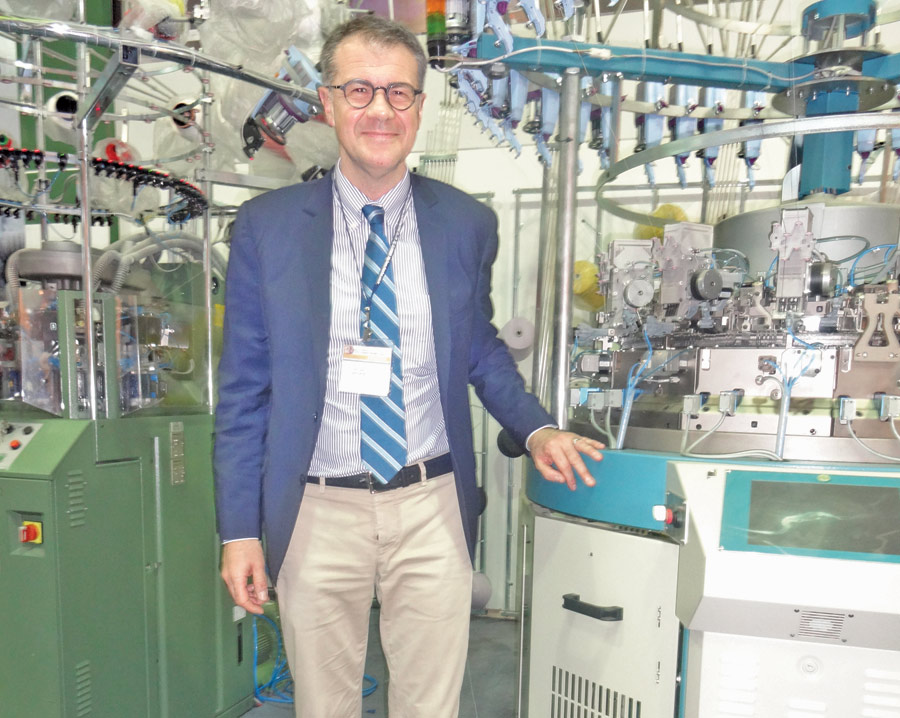
Established in 1919, Santoni started as a socks knitting machines manufacturer and has now grown to fulfil 97% of the global demand of seamless knitting machines for manufacturing innerwear, sportswear, beachwear, outerwear and medical textiles. Present in Bangladesh since 2006, the company has continued to receive orders for its circular knitting machines even in tough times and has been able to break through the Bangladeshi market with seamless machines, with its maiden installation at Urmi Group and 6 other projects in pipeline. “Seamless knitwear is the next growth area for Bangladesh as the product category has started moving out of China,” opines Gianpiero Valsecchi, Area Sales Manager, Santoni and points at the rising receptiveness of industry toward adopting advanced knitting machines.
With installation in the companies such as AKH Group, Metro Group, Knit Concern and Group Reedisha, Santoni is looking at scaling new heights the seamless knitting. “We train our customers at our Italy head office in yarn selection, machine maintenance and design and development of seamless products,” shares Gianpiero.
Exhibited at the DTG fair, the Mec-Mor Variatex CMP machine can make a sweater in four minutes and is equipped with features such as stitch structures using various types of yarn and can do single and double jersey, jacquards, plated effects, pockets and four-colour stripes with speed reaching up to 25 RPM. The machine has open variable panel (Variatex technology) for production of garments of weft knitting. The variable width of panel allows setting number of working needles for required product which in turn enables one single machine to produce all sizes without any wastage.
9) IMA displays the Formula Evo cutting and spreading solutions
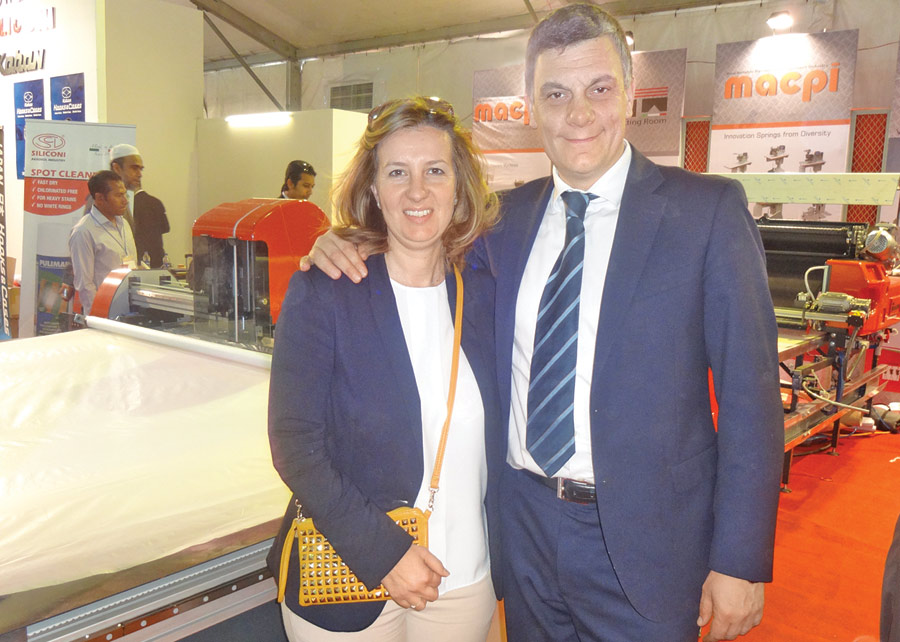
Reinforcing its position as pioneering cutting room solutions provider, IMA was present at the DTG fair with its agent Pacific Associates. With products characterized by high precision and use of latest electronics, the IMA and MACPI booth garnered high footfalls. Stressing on the USP of its cutting and spreading solutions, Stefano Bordogna, Managing Director, MACPI South Asia remarks, “Our machines can be programmed to millimetres and not just centimetres. It is the fabric savings which are pivotal to the utility of our machines because in a place like Bangladesh where labour costs are rock bottom anyway, fabric savings will be of actual significance.” Following recent installations at suit manufacturer East West Group, Stefano is positive about registering a 20 per cent growth in the coming year. “We have done 3 installations of a similar size. The interest is mainly rooted in the fact that the suiting’s fabric, being expensive, guarantees quicker ROIs,” adds Mirella Sardini, Managing Director, IMA Group. With 40 cutters and 70 spreaders installated across the country, the Italian pioneer attributes the success of its solutions to a dedicated team that ensures complete post-implementation training and after-sales support.
The cutting machine FORMULA EVO PLUS 919 displayed at the fair comes equipped with a knife assembly capable of cutting lays of heights ranging from single ply to 7 cm (compressed). The cutting machine’s features include flexible configurations for the optimization of the cutting process, a compact design, fast, noiseless and precise Human Machine Interface for real time data feedback, digital controls and energy saving.
Also exhibited at the booth was Phoenix 890, a spreader developed in partnership with Mitsubishi. The spreader is a modular system, fully interchangeable depending on the demands and challenges of the market. The spreader provides complete flexibility in terms of spreading modes that range from one way to zigzag (with and without movable clamps alongside the option of cut ends). Alongside auto-stop motions in case of power cuts and roll end, the spreader can automatically align the edges, carry out diagnosis and produce fabric usage reports. The machine can be programmed directly on the touch screen for lay length, spreading method and working profiles.
10) Smart Technology exhibits ahead of the curve solutions for denim jeans
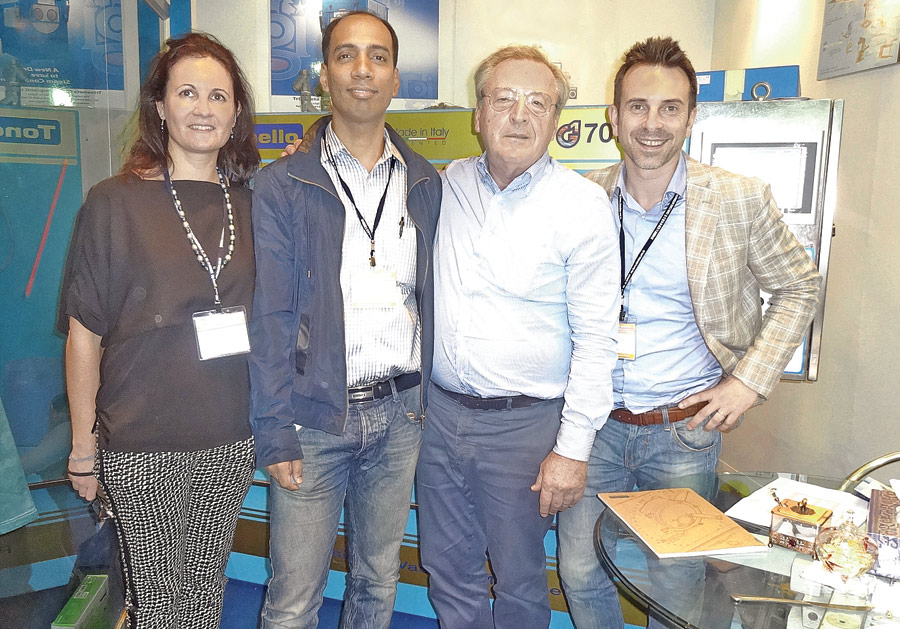
Relatively new in the business of making available apparel manufacturing solutions and technologies to the apparel industry, Smart Technology has precisely created its product portfolio for denim jeans manufacturers, with technologies from companies such as Vibemac, Tonello, Triveneta, Eastman and Nearchimica. This niche of the company was displayed at the recently concluded DTG fair with technology showcase of Vibemac and Tonello. “We have looked at covering all the aspects of denim jeans manufacturing from automation in sewing to value addition in terms of washing,” says Suvashish Paul, CEO, Smart Technology.
Tonello proudly claims to have installed some of its most advanced and high-end washing solutions in Bangladesh in some companies, such as Pacific Jeans, Tusuka Group and M&J Group. “Although priced highest amongst our competitors, our machines give the fastest ROI due to lowest defect ratio and features such as monitoring and altering wash recipes through our headquarters in Italy to get the perfect wash. Through the same system, we can also fix the machine from Italy itself,” asserts Denis Chiarello, Area Sales Manager, Tonello. With Smart Technology, Tonello has developed a team of 5 local technicians for after-sales support and service, and another specialized technician is being trained for using the machine.
Showcased at the DTG fair, the Tonello G1 LW-LW1 washing machine is suitable for replicating wash procedures during sampling stage. Equipped with a B&R processor, the very latest of its generation and an LCD TFT touch screen, Tonello’s software works to optimize the machine’s functions and enables the programming of a larger number of automatic programmes. There are two models in the range – LW and LW1. The LW1 is equipped with basket that has a smaller diameter, thus significantly reducing the minimum load while maintaining the liquor ratio. Outfitted with a pre-extractor, the G1 range is RINA tested and ACIMIT certified. Further, this range of washing machines comes with stainless steel structure and scratch resistant tempered glass. “Our washing machines for knits are more successful in Bangladesh than the same for denim jeans,” adds Denis.
Also present at the booth were representatives from Smart’s Italian principal Triveneta Grandi Impianti, whose advanced dryers are sold in combination with the washing machines from Tonello. The Italian pioneer specializes in loading and unloading technology for washing machines and dryers, through which a 200 kg wash load can be loaded in just 2/3 minutes. Bangladesh accounts for at least 55% of the total export sales of Triveneta dryer, making it the biggest market for the company.
“The automation in loading and unloading the dyers makes the process faster and almost strainfree for the operator. Moreover, with the time saved due to automated loading and unloading, companies can run their washing and drying machines for 2-3 more cycles within 8 hours, increasing the daily output phenomenally,” explains Silvia Marcon, Area Sales Manager, Triveneta. The dryer can also be equipped with rotating counter-door for stone wash treatment, a high precision humidity controller, infrared probe touch screen with tele-assistance from Italy. Triveneta has special dryers for knits, socks and seamless knitwear. These dryers reduce the overall cycle time and wastages.
11) Bullmer registers fresh success with its range of automatic cutters
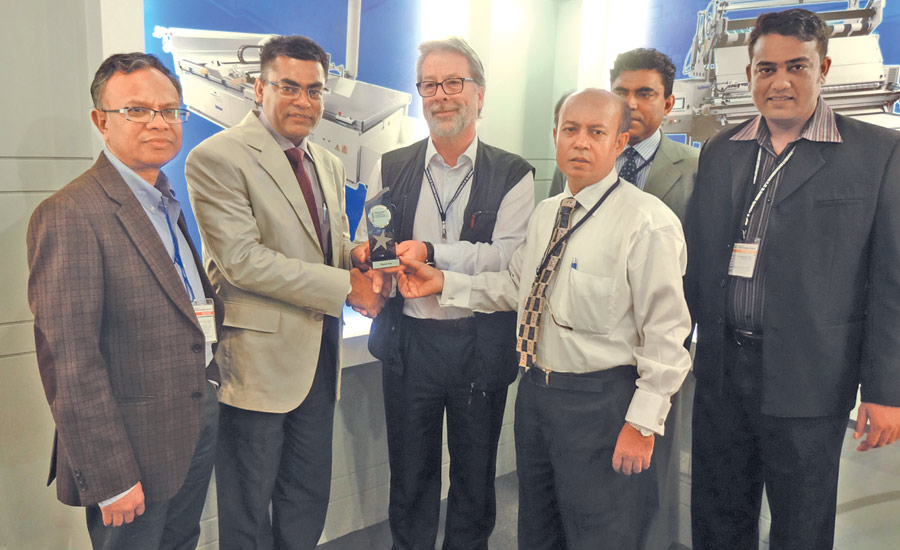
Cutting room solution providers from all over the world have found success with their spreaders in Bangladesh but only a handful of them have been able to replicate the same with its automatic cutters. Among this small group resides the German cutting room solutions provider bullmer with 8 decades of experience in developing cutting room solutions and some of the automatic cutters from the company have been running successfully for 30 years now. “The competition has only affected the market of the spreaders as people reply on German automation when going for automatic cutters. 2015 would be a good year for us, as now the apparel manufacturers will start investing in automatic cutting machines as the industry has realized that a cutter promises uncompromised quality, high cutting output and fabric savings up to 5%,” avers Reinhard Koehler, Area Manager, bullmer GmbH. With a clientele of companies such as EPIC Group, Pal Mal Group, Wisteria Textiles and Epyllion Group, bullmer recently installed an automatic cutter in the suit manufacturing facility of Univogue Garments. bullmer also attributes the recent success to its agent Uni Asia Associates, which has 4 technicians dedicated to the servicing of machines from bullmer.
“We have been using the automatic cutting machines from bullmer for the past 5 years and the machine has never broken down even once. It has also helped us in saving fabric and increasing the cutting room efficiency, enabling us to get a good ROI.” – Gazi Mohiuddin Ahmed
The capabilities of cutting machines from bullmer were lauded by Gazi Mohiuddin Ahmed, Managing Director, Wisteria Textiles, who has been using a cutter from the company for the past 5 years, for cutting knit fabrics. “Since fabrics accounts for 70% of a garment’s cost, I always wanted to have an efficient and productive cutting department. For this, we installed a cutter from bullmer and till now the machine has not broken down for even once, enabling us to get the return on investment in less than two years,” avers Gazi. Wisteria has not yet used the knife-drive brought with the cutting machines and is also hesitant towards buying an annual maintenance contract from bullmer. “Due to the cutter performance we have been able to lower garment rejections as patterns are now cut with at most precision and we only order 3% extra fabric, unlike the 10% extra fabric we used to order before installing the cutter,” shares Gazi. The low downtime of the machine can be attributed to the remote diagnostic facility of bullmer, under which cutting machines can be repaired by technicians sitting in Germany. “The patented knife-drive system of the cutting machine from bullmer is replaceable and can be changed very quickly in case of breakdown which reduces the machine downtime greatly. No other company has such a feature in its cutter,” adds M. A. Saleque, Managing Director, Uni Asia Associates. Consumables and spare parts required most often by the machines have been stocked in good quantities by Uni Asia Associates.
Chittagong-based Univogue Garments selected cutters from bullmer after in-depth analyses of all the available brands in the market. “Majority of the investments are targeted at cutting room automation, wherein people are not only installing cutters and spreaders but also looking at optimising the efficiencies and output of the department by cut order management and planning, which we are able to provide as a part of our services,” concludes Saleque, who has precariously selected the top technology suppliers as his principals.
12) Navis TubeTex exhibits open width knit fabric finisher TM-100
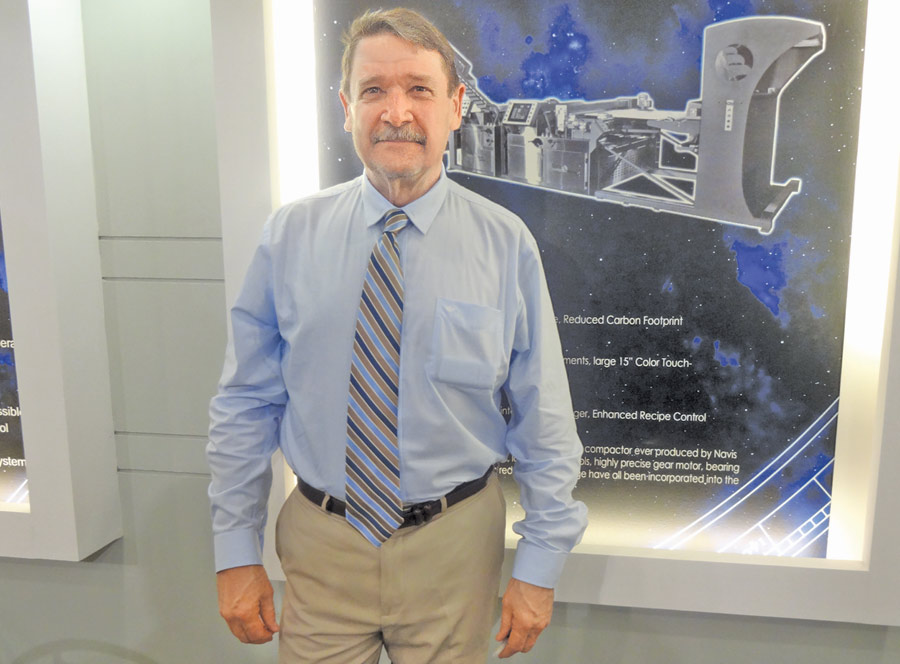
As the quality expectation from Bangladesh is increasing among the buyers, more and more fabric manufacturers are investing in technologies to ensure consistency in quality. Such focus on quality of fabrics has helped the American pioneer Navis TubeTex garner a clientele of more than 350 fabric manufacturers with companies such as DBL Group and Knit Concern. “Bangladesh is a major market for our machines and we have found majority of the success with our tubular compactors,” shares Gary Morris, Sales Director – Asia Pacific, Navis TubeTex. Another reason for the strong presence of the company in Bangladesh is that the country majorly manufactures cotton fabrics, wherein lies the expertise of Navis TubeTex. “The reason why our tubular compactor Pak Nit II e3 has found success in Bangladesh is because an open width fabric finishing project is 50% more expensive than tubular finishing projects as the former requires stenters,” elaborates Gary Morris. Navis TubeTex has started 2015 on a positive note and has installed two tubular compactors to Bangladesh.
Although fabric compactors are the backbone of the American pioneer’s product portfolio, Navis TubeTex has expanded its reach to machines for both open width and tubular fabric processing and finishing applications like shrinkage control, water extraction, fabric drying, bleaching, mercerizing and heat recovery. The Navis TubeTex TM-100 compactor controls shrinkage in 100% viscose to less than 4-5% at a speed of 30 metres per minute and other difficult fabrics to less than 3% to better control shrinkage and weights over any other compaction technology. Developed on the basis of extensive engineering and research in terms of new materials and manufacturing techniques the 2500 mm (100 inch) wide machine brings quicker style changeovers and higher quality while reducing running cost. The machine produces fabrics with a softer hand, superior shrinkage control, width control, and yield control. Optional width control and stitch control devices are also available for further ease of operation.
13) Eton offering the industry new ways to be productive and efficient
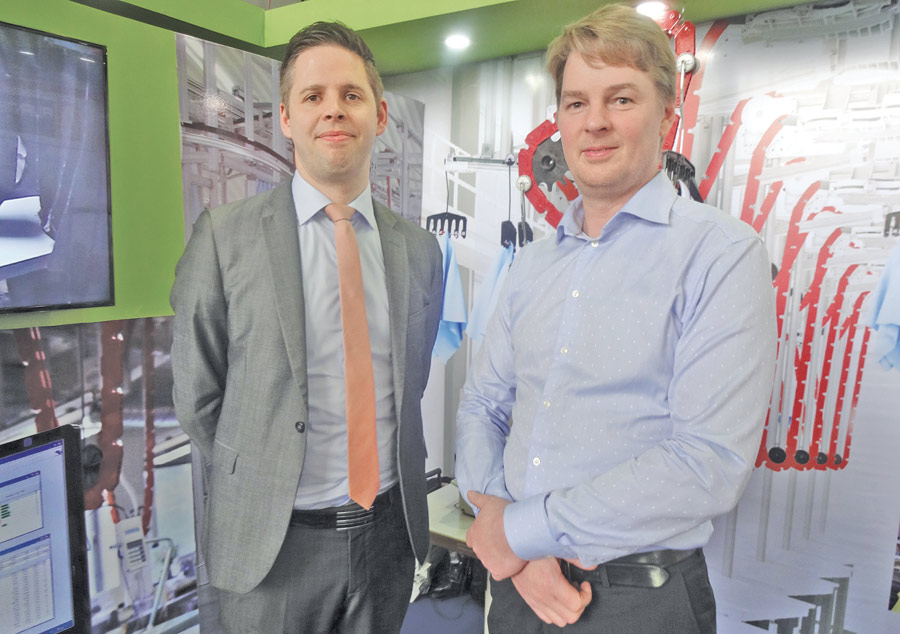
The discovery of the world’s first unit production system back in 1967 by Eton Systems changed the way apparel manufacturers’ deal with WIP, space utilization, material flow and other such factors critical to the efficiency and output of their factories. Now with the Bangladeshi apparel manufacturers pushing hard for efficiency and productivity improvement for increasing output instead of putting up another factory, the time could not have been more right for Eton to participate at the DTG fair. “The recent wage hikes have pushed the people to focus on aspects of space utilization and productivity improvement,” shares Mikael Haag, CEO, Eton Systems AB. The Swedish company has been present in Bangladesh for the past 4 years through their agent Prime Asia and has done successful installations in RK Industries. “I see very bright prospects for Eton in Bangladesh and the manufacturers are way ahead of the price game,” he adds.
To further expand its market share in the country, Eton will organize information and knowledge-sharing seminars with Prime Asia in Dhaka, to make the manufacturers understand the advantages of an overhead material handling system along with the competitive edge of Eton as a solution provider. “Generally an increase of 25% in efficiency and for some products up to 50% can be seen with the usage of the Eton systems,” adds Fredrik Andersson, Key Accounts Manager, Eton Systems AB. To maintain the quality of installations and trainings in Bangladesh both the installations and trainings are supervised by people from Sweden and other European countries. The characteristic red chain, adjustable both vertically and laterally, cater for an ergonomic posture for the operators, who can choose to sit or stand up while working and set the chain at a comfortable distance. In addition, there are three Eton Systems radio frequency readers on each station, automatically correcting the order of the product carriers, as well as providing information of products leaving stations in buffer. This feature provides against over-loading. Several electrical motors guarantee maximum uptime. The system will keep going even if one motor shuts down.
14) Aeoon Technologies brings innovative digital printing technology to Bangladesh

At a time, when innovation is the need of the hour, to stay in the business, the apparel manufacturers in Bangladesh are looking towards digital printing technologies as the next focus area. Realising the same, Austria-based Aeoon Technologies showcased its garment and textile digital printing machine, at the booth of its agent RH Corporation. “The deterrent towards going for digital printing machines is the price of these machines but with the kind of technology we are offering, the ROI would be certainly faster because this machine prints on both fabric and individual garment panels,” avers Angelo Schiestl, Managing Director, Aeoon Technologies.
Bangladesh has been introduced to digital printing only a few years ago and hence the country is still learning about the machines, technology and inks. “The basic idea of bringing the machine to the fair was to showcase the capabilities of the machine and make people understand the same. The machine displayed this time would only be up for sales in 2016,” adds Angelo. Since digital printing requires good knowledge and training before operating the machine, Aeoon has assigned 4 technicians only for the same purposes. “In 2015 we will focus on establishing a spare parts store, consultancy team and training local technicians, and our agent would be very instrumental in helping us do the same,” shares Angelo.
The machine exhibited in DTG fair was the Aeoon Kyo 12, which uses pigmented and water-based inks. Promising an output of 800 T-shirts per hour in case of light colours and 400 T-shirts per hour in case of dark colours, the printer uses Kyocera KJ4B Piezoelectric drop on demand print heads. Using up to 12 inkjet print heads with 2558 nozzles, the printer can achieve a resolution of 2400 DPI. Warranty of one year is offered on all machines of Aeoon, except for Kyocera print heads, whose warranty is provided by Kyocera only.
15) Hebbecker pioneers remote diagnostics in screen printing machines

Hebbecker began its journey of screen printing, flocking and curing solutions in 1999 from the German city of Stuttgart. In attendance at the DTG 2015 with its Bangladeshi agent Uni Asia Associates, Hebbecker marked its presence at the show with its Versatronic Alpha-Line-Combi, a 20 station screen printing carousel. The variants of the machines are available in 6 to 20 stations and can print in a maximum of 18 colours. Every station is equipped with servo motor-driven four cylinder power squeegee system and the pressure settings of every station can be set individually to achieve the highest degree of precision while printing. Hebbecker’s printing solutions have also pioneered remote diagnostics for printing machines. “We recognize the importance of timely repairs and part replacements. Keeping the same in mind, we have incorporated in our machines sensors that are monitored from Hebbecker’s professionals sitting in Germany. If any technical glitches arise they can be rectified solely by programming,” adds Klaus Wagner, CEO, Hebbecker. At the same time, mechanical spare parts are available with Uni Asia Associates in Bangladesh, who have been trained by the German principal for installation and technical assistance post-sale.
While most intermediate dryers need a lot of energy because in short time they have to achieve a high temperature, which also damages the textile, with Hebbecker radiators, the absorption and/or the reflection of the IR jets is in relation to different colours and hence is more neutral. Thus, these IR emitters are harmless and are not harsh on the textile unlike short-wave emitters; hence the textile will not be damaged. This cannot be achieved with short-wave emitters which have too high temperatures in connection with a too long drying time.
Having already established a niche in regions like Egypt, South Africa, India and Iran, Hebbecker is now looking at nourishing Bangladesh as a hub for printing. “Printing in Bangladesh is very popular as printed garments, even in the form of sportswear, is gaining popularity overseas. We are in fact working with Nike on developing a print as well. On the other hand there are printed shirts in European markets selling at Euro 70-80,” shares Klaus.
16) FKgroup optimistic of growth in Bangladesh with its fast and sustainable cutting room solutions in partnership with Wintex

Only a handful of people in the apparel industry would know Flavio Cattini, who is the inventor of the first spreading machine in the world with electrical parts under the brand Caron in Carpi, Modena (Italy) in 1961. In 1981 Caron s.n.c. closed its operations and F.K. Arna s.r.l. was born to continue with the production of advanced spreading machine and in 1987 F.K. Systema s.r.l. was established with the objective of solving problems specific to garment design. The company launched the first CAD system and the first pen plotter to draw markers for the cutting machines. In 2007, F.K. Arna s.r.l. and F.K. Systema s.r.l joined together under the brand FKgroup s.r.l. In the same year, following huge investment, new software based on SQL, new spreading machine and new cutting machines were launched.
As of now, the company is owned by Flavio Cattini and Sergio Gori (Ex-Pilot of Italian force and NETO), who joined the company in 2007 and FKgroup has now transformed into a total cutting room and product development solution provider. “We are still manufacturing in Italy and have not outsourced or shifted our production to China, but our machines are still reasonable in price than that of other European and American companies. This was made possible by the millions of Euros we invested in completely redesigning the machines in partnership with SIEMENS GERMANY. Hence all the components in our machines have been made by SIEMENS GERMANY,” avers Sergio Gori, Commercial Managing Director and Co-owner, FKgroup. Due to such interventions, the automated cutting machines from FK have achieved a blade vibration of around 6000 RPM and cutting speed of 110 metres per minute, much higher than the industry average of 50 to 80 metres per minute. All these factors attract many buyers for FKgroup from all across the world, with China being its biggest market globally, followed by Peru, Argentina and Mexico to name a few.
To represent its solutions in the Bangladesh market, FKgroup has partnered with Wintex Resources Limited. “We have 16 years of experience in cutting room automation and our employees have on an average 8-10 years of experience in the same field. Another policy of ours is that, irrespective of whether a company buys SIEMENS spare parts from any part of the world or from the local market, they would still be supported by us because FK/WINTEX doesn’t want to turn ‘good service’ into a ‘profit centre’, service is our main strength,” asserts Md. Faruk Hossen Sarker, CEO, Wintex Resources Limited.
The electrical consumption of FK cutters is only 5.9 KW (Eco-power Technology), which is almost five times less than what is consumed by other cutters. Due to this the annual carbon emission of the cutters is 12 tonnes less than that of any other cutter. “We have a certification from World Health Organisation (WHO) certifying our cutters for their low carbon emissions and zero sound levels, hence suitable for the health of operators,” adds Sergio Gori.
With such interventions, FK has found success in the country with a true and capable partner WINTEX with installations in companies such as Esquire Group, Hameem Group, Purbani Group, Epic Group, Aman Group, Osman Group, KDS Group, Azim Group, AL-Muslim Group and so on. “Presently, Hameem is our biggest customer with 22 machines including auto loaders, spreaders and cutters, while few more machines are in the pipeline. In the future, we plan to install at least 15 to 20 cutting machines along with respective spreaders in the Bangladeshi market within two years. Especially for the ‘Green’ factories, FK is the only & best solution,” shares Md. Faruk Hossen Sarker. WINTEX is open to exchanging old, worn-out and non-functional cutters, spreaders and plotters from apparel manufacturers, in return offering a big discount on FK’s range of respective machines.