Starting off as a technique to cover torn vicinities of clothing and making it ornate, appliqué and patchwork techniques have come a long way to become interesting value addition techniques. Be it surface decoration of foundation fabric by overlapping and layering or unison of light and heavy-weight fabrics by stitching; appliqué and patchwork techniques are now interpreted in millions of different ways creating attractive and intricate decorative garments and home furnishing accessories…
Carried forward since the colonial times, patchwork has moved ahead from being a popular technique to repurpose scarps of fabrics to become a bold fashion statement on the runways, whereas appliqué being an ever-evolving technique has been induced with varied patterns of embroidery and cut-work. Inspired by the application versatility, this cut-and-sew and cut-and-patch trend never seems to tire and finds new application and interpretation season after season.
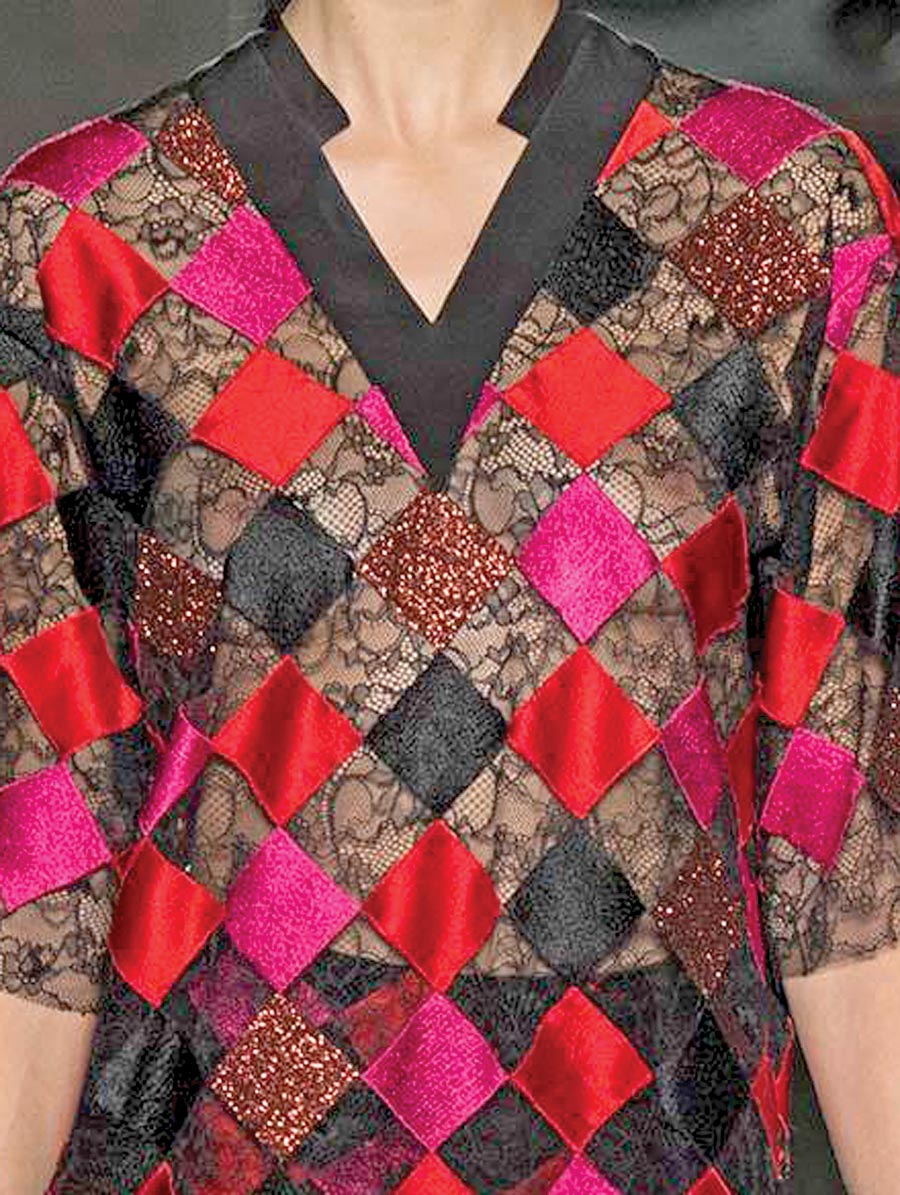
Today, the varied creative twists are indeed interesting… leather cutout stripes are stitched along with variety of laces creating a peek-a-boo effect. Block printed motifs are cut and fixed on fabrics with embroidery creating a value added surface. Though carried out traditionally by hand, now both the techniques are facilitated to be carried out through embroidery and sewing machines. Be it 3D flowers, circular figures or rectangular cut-outs; surface ornamentation has got a new dimension with fabric layering and overlapping method.
With rising popularity of appliqué and patchwork among the designers, the runways have also witnessed magnificent presence of this fabric on fabric adornment, a modern form of recycling. Designers were seen offering patched concepts on S/S’14 and A/W’14-15 collections, marking them as a major upcoming S/S’15 trend. Jutya Wantabe showcased various modes of layered and overlapped patchwork, rendered in mesmerizing array of materials in shapes like rectangles, godets, squares and circles whereas on the other hand Peter Pilotto unveiled shift dresses fluttering with intricate petal appliqué. Simonetta Ravizza, Missoni, McQ and Aquilano Rimondi – all were seen using patchwork in their collections in distinctive avatars. Jigsaw and pixilated patchwork took the trend a notch higher with Fendi and Bottega Veneta displaying their distinguishing versions.

Varied interpretations of appliqué and patchwork are now being carried out by the exporters and designers, owing to the vast assortment of adaptations observed on the global runways. “We are into a lot of appliqué – appliqué with embroidery, appliqué with embellishment and many other variants. For this season, we are trying to put appliqué ornamentation on almost every style we develop, be it floral appliqué or some abstract pattern patchwork. Laces are mostly available in floral designs, therefore, we try and integrate geometrical pattern in the appliqué to give an innovative twist to the whole style,” says Dolly Sidhwani, Co-Founder, Nobel Faith Clothing, sharing her product development for the ongoing S/S’15 collection.
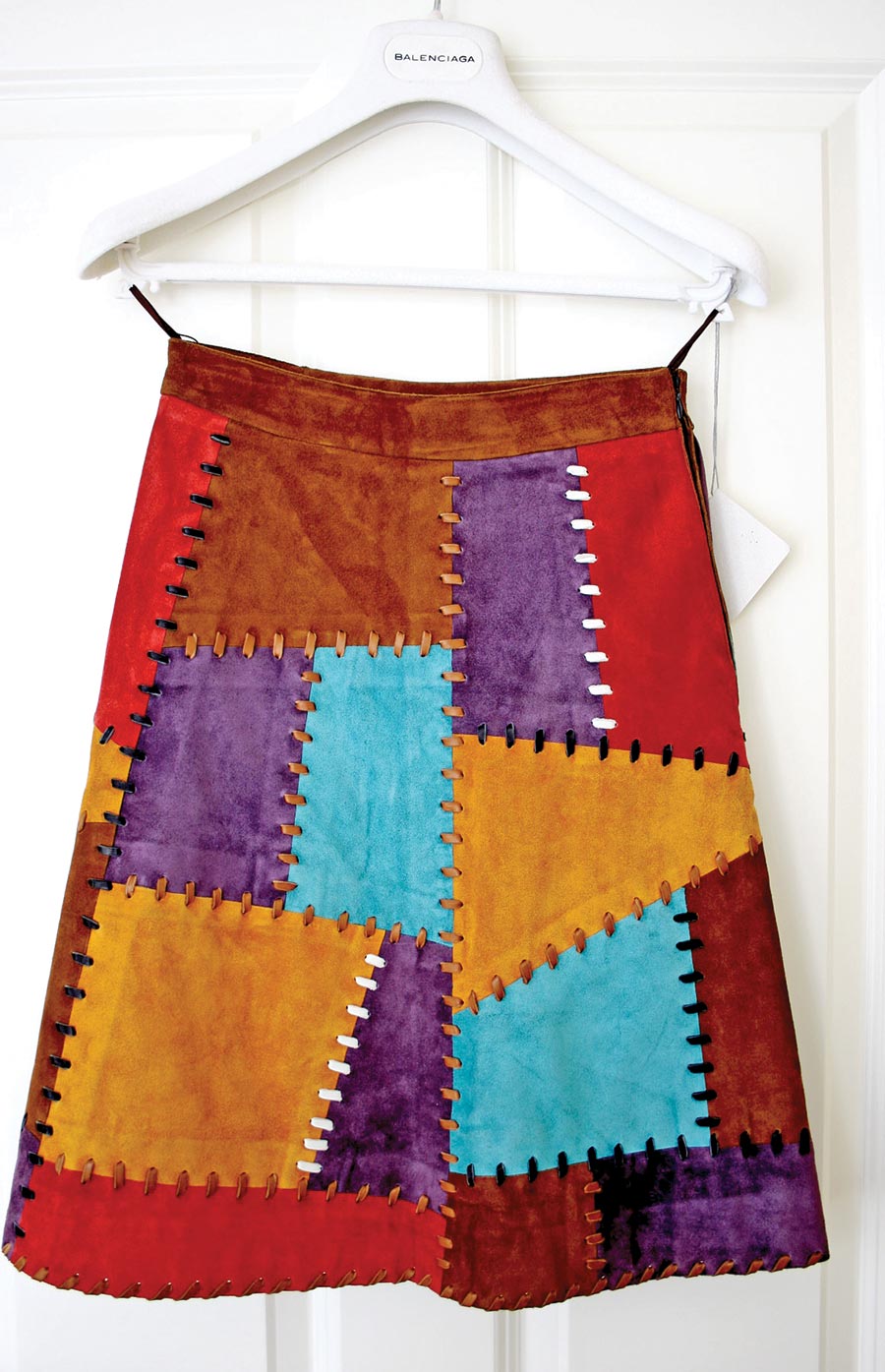 Being achieved through different processes, appliqué and patchwork were two distinct techniques, but in recent times the differential lines have started to fade and exporters consider both the techniques to be almost the same. Also, traditionally, the most important thing to be kept in mind while developing a style in patchwork and appliqué was to join fabrics with similar properties together. For instance, solid cotton should be patched with cotton prints and cotton laces only. But now, a lot of experimentations are taking place in terms of different fabric applications as well. Laces, leather, knits, cotton varieties and eyelets are being patched in striped and circular patterns to achieve innovative outputs. One company which is developing their S/S’15 collections for girls in machine-made appliqué for their dedicated customer Disney is Sangar Overseas, manufacturers and exporters of ladies, girls & new-born apparels.
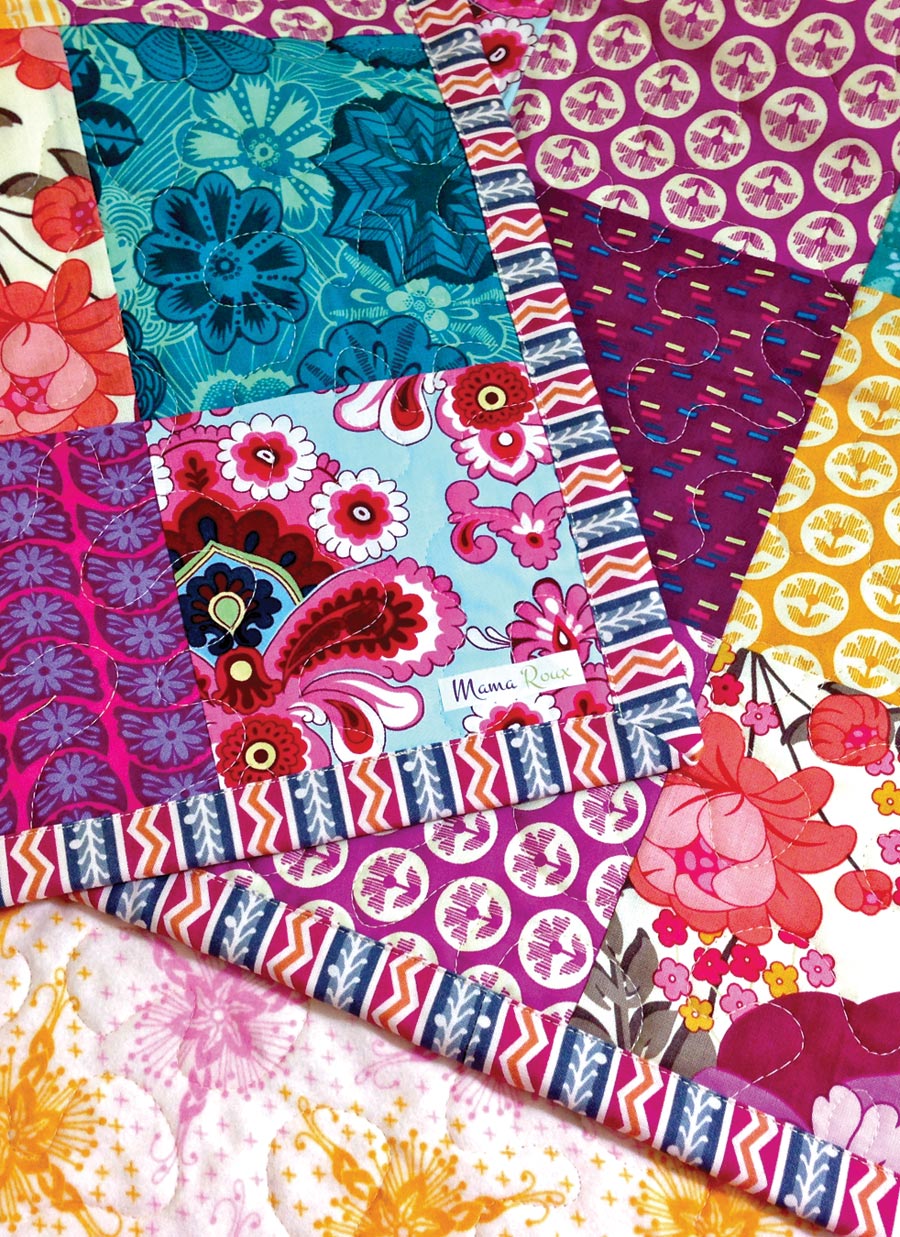 Manish Sareen, President of the company, explaining about their women’s wear collection for the season said, “For women’s wear, we are doing embroidered appliqué. After embroidering the periphery of the cut-out, we highlight the motif with sequin in the centre. We are also doing sheer cut-out appliqué, where we incorporate crochet and bobbin laces with cottons. Earlier, we used to do patchwork in the traditional method, by cutting 2×2 inch square and sewing them. But now we are merging two different fabrics together to create jigsaw prints. In fact, now most of our styles are being created by using multiple fabrics. With cotton we add in schifflies, dobbys, swiss dots, basic cotton cambrics, and laces. Similarly in polyesters also, there are polyester swiss dots, or micro polyesters, etc. it all depends upon how innovatively you mix and match.” For Indian exporters the advantage is double-edged – for one the technique has always had an Indian connection with buyers looking for the work in various collections and second, the technique being mostly handcrafted the skill of workers is almost beyond compare in the technique, so even with the advent of technology, India has retained its edge.
 Even though the patching process has been contemporized with time, this ever-expanding technique gets a quirky touch each time, each season. Revisiting the past, patching is now being carried out in the traditional folk-oriented way. Appliqué over the years has gone through a round of modifications but now replicating the conventional; patches of plain or printed fabrics are sewn on top of base fabrics and are highlighted with thread embroidery like the kantha stitch and phulkari. Whether done in a folksy or a contemporary way, appliqué and patchwork techniques always manage to present appealing pieces that are stylish and having graceful quotient.
Using the technique for best effect, exporters are experimenting on different looks. “We are doing appliqué by both – hand and machine. By hand we are doing a lot of appliqué in Barmeri prints, wherein we are highlighting the appliqués with mirror work and kantha stitches. We are not doing much of patchworks this time, as our patchwork is mostly hand stitched. Since hand stitched products sell at higher rates, so products like jackets only are being produced in barmeri prints in patchwork,” informs Rajeev Sujanti, MD, Chunnu Cloth & Craft. Another company that is working extensively with the technique is Prabha Handicrafts, manufacturers and exporters of women’s wear. “Traditional patchwork is our strength. We cut out 5×5 inches swatches from different printed and solid cotton fabrics and construct skirts, palazzos, trousers, jackets and tunics out of the patched fabric. The prints are mostly an amalgamation of block and screen. We are doing a range of prints in paisleys, florals, tribal patterns etc. and garnish them with hand chain stitch to give an ornate finishing touch,” shares Prahlad Ray Chippa, Proprietor of the company. Being able to get moulded according to the requirement of the user is the most intriguing property of this technique, making it one of richest and never fading surface decoration crafts.