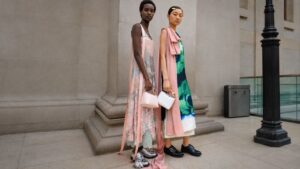
Silhouettes drawn from the 1920s flapper era are reappearing across global runways and red carpets this festive and wedding season, offering a straight-cut, sleeveless alternative to the fitted eveningwear that has dominated recent seasons.
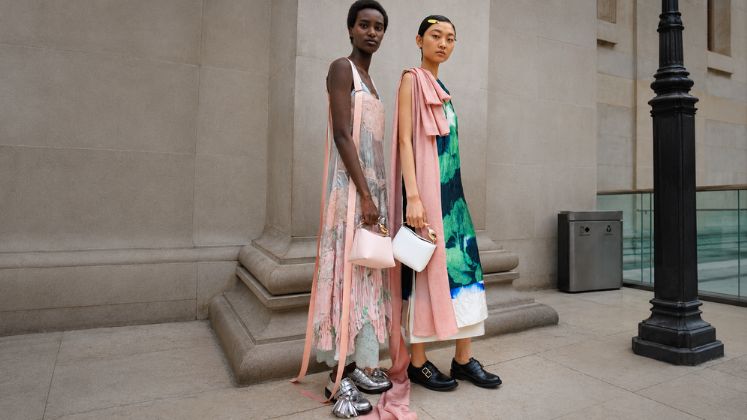
The defining elements are a loose, column-like drop-waist silhouette, exposed shoulders, and surfaces covered in hand-applied beading, sequins, floral appliqué and metallic embroidery. Originally associated with dance-floor wear, the silhouette is now positioned as eveningwear for December parties and New Year’s Eve, and is being adapted for daytime by pairing it with ballet flats or loafers in place of the era’s original T-bar heels.
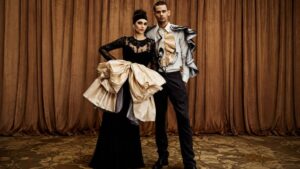
Global collections for the current festive season favour fringe, tassel and crystal-embellished hemlines over structured tailoring, marking a shift toward embellishment and movement in eveningwear.
Several Indian designers work in registers adjacent to this silhouette. Falguni Shane Peacock’s crystal-embellished gowns use a comparable density of surface embellishment; Amit Aggarwal’s structured metallic textures apply a similar shimmer within a more architectural silhouette; and Tarun Tahiliani’s sequin- and zardozi-embellished gowns bring Indian embroidery techniques to a related silhouette. Gauri & Nainika’s embellished eveningwear also falls within the same visual category. These labels indicate that the embellishment techniques associated with the flapper silhouette, hand-beading, zardozi and sequin work, are already part of existing production capability at Indian ateliers.
The trend coincides with wedding, sangeet and New Year party season, when demand for embellished eveningwear is already high. A straight, sleeveless cut is comparatively simple to produce at scale relative to structured lehenga and gown formats, and its embellishment-heavy construction aligns with hand-embroidery, sequin work and beading techniques already used by domestic manufacturers.
The silhouette’s evening-to-day transition, achieved through a footwear change, allows brands to position a single design across both party wear and daywear collections rather than a single occasion category.