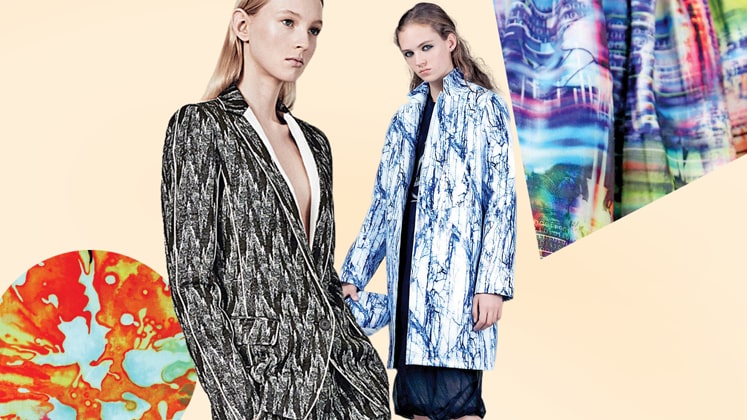
Regarded as the easiest method of imparting newness into a garment, tie & dye has continued to be a favourite, not only with designers but also in mainstream fashion. Giving a new twist to this ancient technique of fabric dyeing, the effect of folding, marbling and pinching is being re-created through the medium of printing. Be it the effect of over-dyeing, dip-dyeing, tinting or wrinkling, tie & dye effects are no longer constrained to being achieved through dyeing methods. In fact, with designers and job-workers experimenting with varied printing techniques, ‘printed tie & dye’ has become a value addition staple. Witnessing the growth of printed tie & dye versions on the runways since the last three seasons, rotary screen, flatbed and digital printing job-workers have grabbed this opportunity to launch new and innovative adaptations to meet the fast changing demands of fashion…
Tie & dye is a playful way of incorporating print in your look, especially in the winter months. As the Indian export industry does not believe in investing too much time in the development of Fall collections, colourful and trendy tie & dye prints on silhouettes like leggings, trousers and scarves can help strengthen the client base. Discussing their interpretation of tie & dye prints, Tajendra Chadha, Owner, JV Digital Printer, manufacturer of garments, made-ups, accessories and providers of digital printing services said, “Wearing scarves and stoles has become a style statement nowadays and a scarf or leggings with an attractive print can accentuate the way you dress up. We custom design for stoles and scarves according to the latest trend, and we create the water colour effect similar to the tie & dye technique on the base and throw in floral or line elements on top. Achieving water colour and dyeing effect is very easy in digital printing, which also enables you to create exact print every single time with an added advantage of layering the prints.”
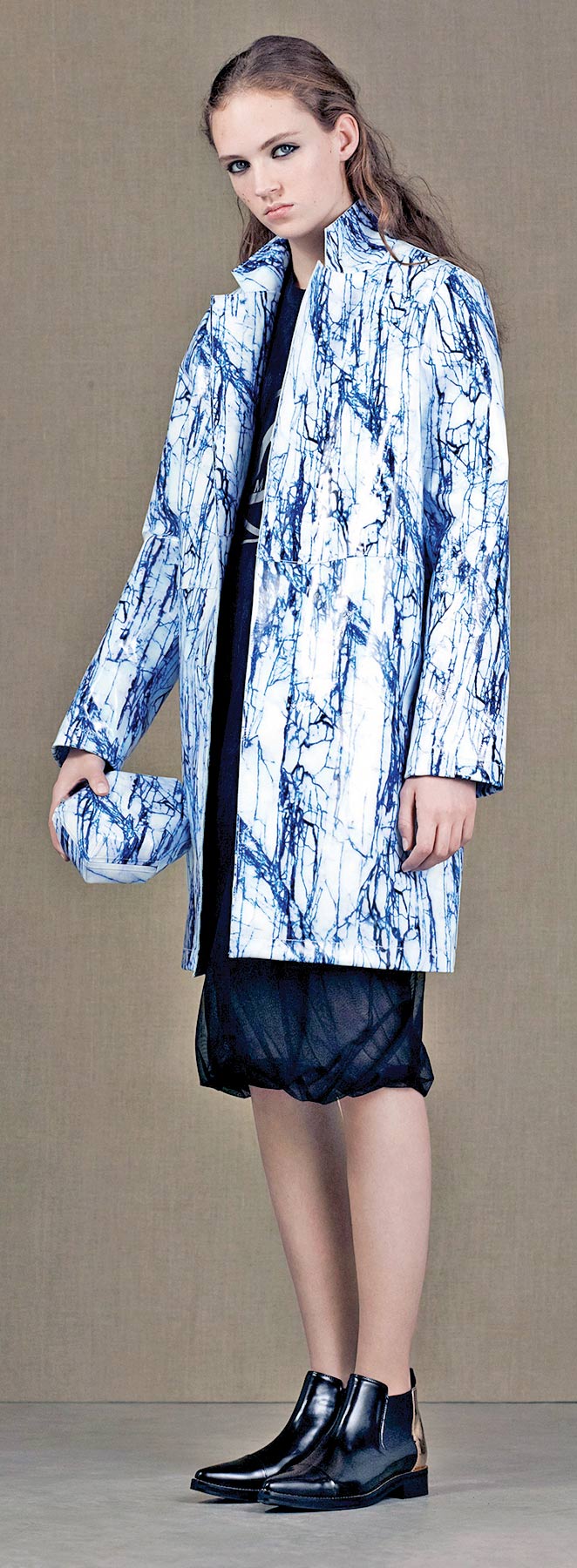
The effect of marbling, amongst others, is manipulated the most by designers. McQ Alexander McQueen in their Pre-Fall 2015 collection, created a blue and white marbling effect with a cracking look, while Alexander Wang in his Resort 2015 collection presented a plethora of spatter inspired marble prints on bomber jackets, bra-lets and skirts. With every technique moving towards digitalization and customisation, tie & dye can see a lot of innovations through varied printing techniques. Munesh Kumar, Proprietor, Kalka Filaments, manufacturer, exporter, supplier and wholesaler of printed leggings, stoles and scarves, said, “Nowadays, with increased design demands from clients, we incline more towards developing combination prints. Be it colourful tie & dye print in chevron patterns, smoky marbling effect with a graphic touch, or ikat designs being mimicked in a flowing style, we prefer to get a particular style printed from one method instead of first dyeing and then printing to achieve the desired look.” Even yarn dyeing techniques are being emulated for creating varied digital and rotary prints.

J Mendel’s Pre-Fall 2015 collection witnessed widely varied ‘Ikat-ish’ prints. A combination of jagged lines and hazy visuals was created in blacks and whites to garnish gowns, midi-skirts and frocks. On the other hand, presenting his variation of yarn-dyed effect, KLS – Kimora Lee Simmons, adorned her tuxedo and smartly tailored pants with hazy and obscure chevrons. Yarn tie & dye effect is mostly achieved through rotary printing as the colour provides the fabric with an innate embossed look, making the printed fabric appear to be woven. Mahavir Kankariya, Director, Kankariya Textile Industries, provider of rotary and digital printing services, discussing the dyeing effects being achieved through rotary said, “Rotary printing, due to the numerous developments in the industry, has grown to become a very important printing method. With state-of-the-art machines available, we are able to mimic similar effects, which were earlier only possible through digital or manual dyeing. A lively and interesting print called the halftone print is getting very popular these days. In order to present halftones, similar to the kind we notice in tie & dye, can be easily created in a dot pattern, which is very fine and conveys an overall halftone effect, even at close visual range.” Rotary printing is not only able to deliver prints with embossed and woven aesthetics, but can also very well re-create the garment and yarn tie & dye look.
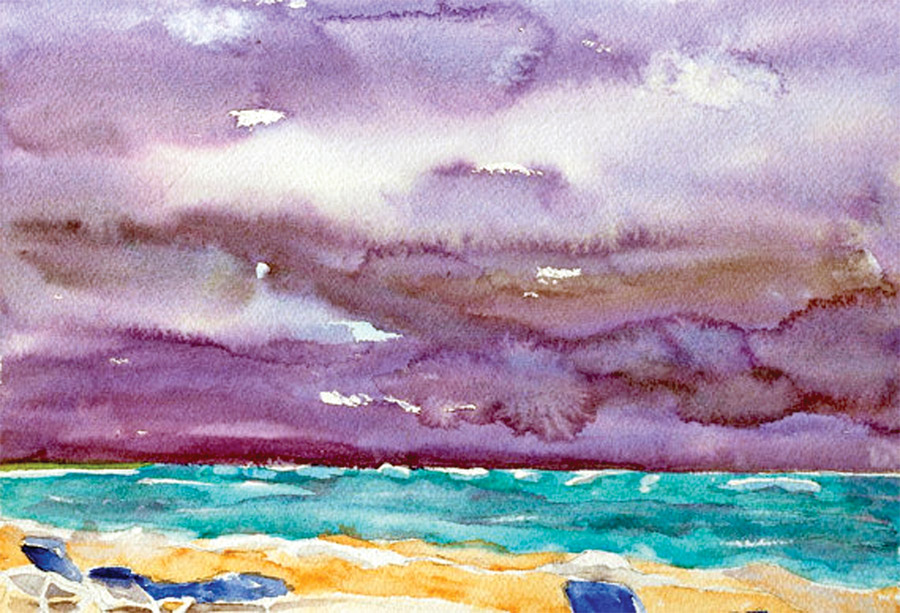
Being able to achieve a hand-done technique through machinery does not take away the focus from the original tie & dye, but with increasing experimentation in this segment, an inference can be drawn that printed tie & dye effects are here to stay. Sikander Peshoria, Co-owner, Garb & Guise, speaking on similar lines said, “Slowly but steadily, digital printing is moving ahead to provide production quantities to its customers due to which many designs are being converted into digital forms. We are noticing ikat, tie & dye and marbling effects being popularized digitally, which could become a huge trend in the future. Inspirations are being drawn and water colour, smudged and muddled prints are being developed.” While on the one hand we see an innovative trend coming up, on the other there is a set of service providers who believe that tie & dye prints can be a fad but can never become a long-term fashion statement.

M.K. Maheshwari, Partner, Sarc Original, exporter and manufacturer of readymade garments, is concentrating majorly on over-dyed and tie & dyed fabrics. He shared, “We do a lot of experimentation with tie & dyed fabrics, and with growing demand we are also mixing dip dyeing and tinting effects with vintage washes. We are also collaborating tie & dye with block and screen printing. Now these effects, which are achieved through the skilled hand of an artisan, can never give the same feel if developed with a machine. Every hand-done product has a unique charm that cannot be duplicated with any machinery.”
Tie & dye is currently making a small shift to the digital platform through which the age-old method is likely to witness a lot of experimentation and innovation, plus the wastage and pollution related to this technique will be minimized or removed altogether. Immense amount of water is wasted during the manual tie & dye process and most of the times the water cannot be reused. With high amount of resources being consumed in pre- and post-treatment, a printed option of the same would be more viable, especially in places where Government rules are becoming more stringent by the day. Deepak Vashisth, Owner, Dopulent Crafts, debating over the benefits that printing provides said, “Though digital is also not commercially viable for bulk orders in view of the cost and time factors, but it is able to deliver unique designs in multi-colours not achievable through manual methods. Also, in the coming years, if the cost of digital inks and print heads comes down, and if we are able to deliver huge production with low maintenance cost, then all hand done styles will be replaced with digital prints.”