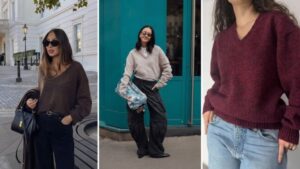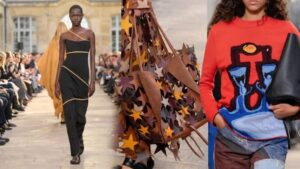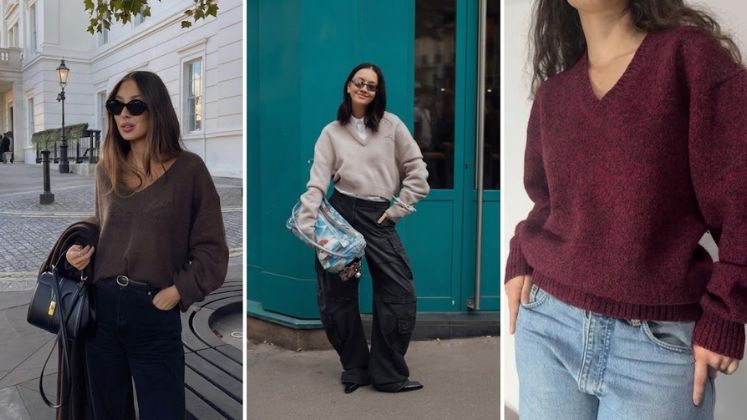
After years in the crew-neck’s shadow, the V-neck returns with brighter colour, deeper plunges and contrast trims. It is also a strong layering piece.
For several seasons the crew-neck ruled knitwear, and the V-neck read as an office-wardrobe relic. That has changed for autumn 2026, with V-necks resurging and, this time around, being far from boring. The revival did not start this season. Prada, The Row and Bottega Veneta backed the sleek silhouette on the fall 2025 runways, usually with a higher neckline sitting just above the collarbone. Now the shape is opening up and getting louder.
Colour is the main driver. Miu Miu broke up an otherwise neutral collection with bright V-necks and cardigans, and the brighter the shade, the bigger the trend. The two-tone approach is equally strong. MM6 Maison Margiela sent a two-tone V-neck down its fall 2026 runway. Staud showed a chocolate-brown knit with blue and green stripes along the neckline. Colour-blocking means one garment can carry the whole outfit, which suits a market that wants statement pieces without effort.
The other change is the level of detail. Brands are pushing V-necks in a more playful direction this season, with lace, fringe and ruffles. Loulou de Saison, for example, gave a light grey knit a romantic touch with lace trim. Proportion has shifted too. Grazia’s fall 2026 sweater edit describes the new versions as slightly oversized, with a deeper but not alarming plunge that frames a tank, tee or crisp shirt.
That framing is why the V-neck works commercially. The neckline lets a tank sit underneath on warmer afternoons and a button-down adds structure as temperatures fall. The same sweater moves from denim to tailored trousers, so it suits shoppers who want clothes to do more than one job. High-street labels are already selling into this. COS features a Merino Wool Layered V-Neck Sweater in Who What Wear’s fall 2026 trend-shopping edit.
In India, the V-neck has never fully left the winter wardrobe, and the layering logic fits the country’s milder, shorter winters. Monte Carlo has roots in Ludhiana’s woollen industry and launched in 1984 as a premium woollen winter-wear label. Allen Solly is described as having moved from formalwear into youth-oriented winter lines in pastel shades, slim fits and vibrant patterns. Uniqlo and Marks & Spencer are the international names Indian shoppers most associate with merino and pure-wool knits. Uniqlo is known for its cashmere and Heattech range, and M&S for its pure-wool sweaters. Newer players are also targeting the fine-gauge, layering-friendly end of the market. 98 Degree North sells Australian merino sweaters, according to its own site.
Beyond these, a wider set of Indian labels covers the category, from heritage wool to digital-first. Raymond began as a small woollen mill near Thane Creek in 1925, and it makes sweaters in pure wool and blends. Ludhiana’s Duke Fashions, launched in 1966, offers sweaters and cardigans alongside casualwear. Indian Terrain, launched in 2000 for men and boys, is noted for sweaters in a range of colours, prints and patterns. Cantabil sells knit sweaters for men and women, with V-neck listed among its styles. Shingora, known for scarves, shawls and winter fashion, makes knit sweaters and pullovers at its in-house facility in Punjab.
At the premium end, Rare Rabbit sells pullovers, crewneck, high-neck and zip sweaters in lightweight to warm fits. Louis Philippe originated in India, was founded in 1989, and was among the country’s largest apparel brands as of 2018. It sits with Peter England and Allen Solly in the Aditya Birla Fashion and Retail (Madura) stable. Digital-first labels are pushing colour and fit. Snitch positions its men’s sweaters as a blend of everyday essentials and modern statement pieces, while MIXT by Nykaa Fashion offers vibrant sweaters with fun prints. This is the segment where the season’s colour-led V-neck story is likely to play out.