As a leader in integrated technology solutions, Lectra is the top choice of major global apparel brands and manufacturers. Operating in 35 countries and providing associated services to 23,000 customers in over 100 countries, Lectra offers a range of hardware and software solution rights from design to pattern making to entire cut order process, completing the chain with spreading and cutting hardware solutions.
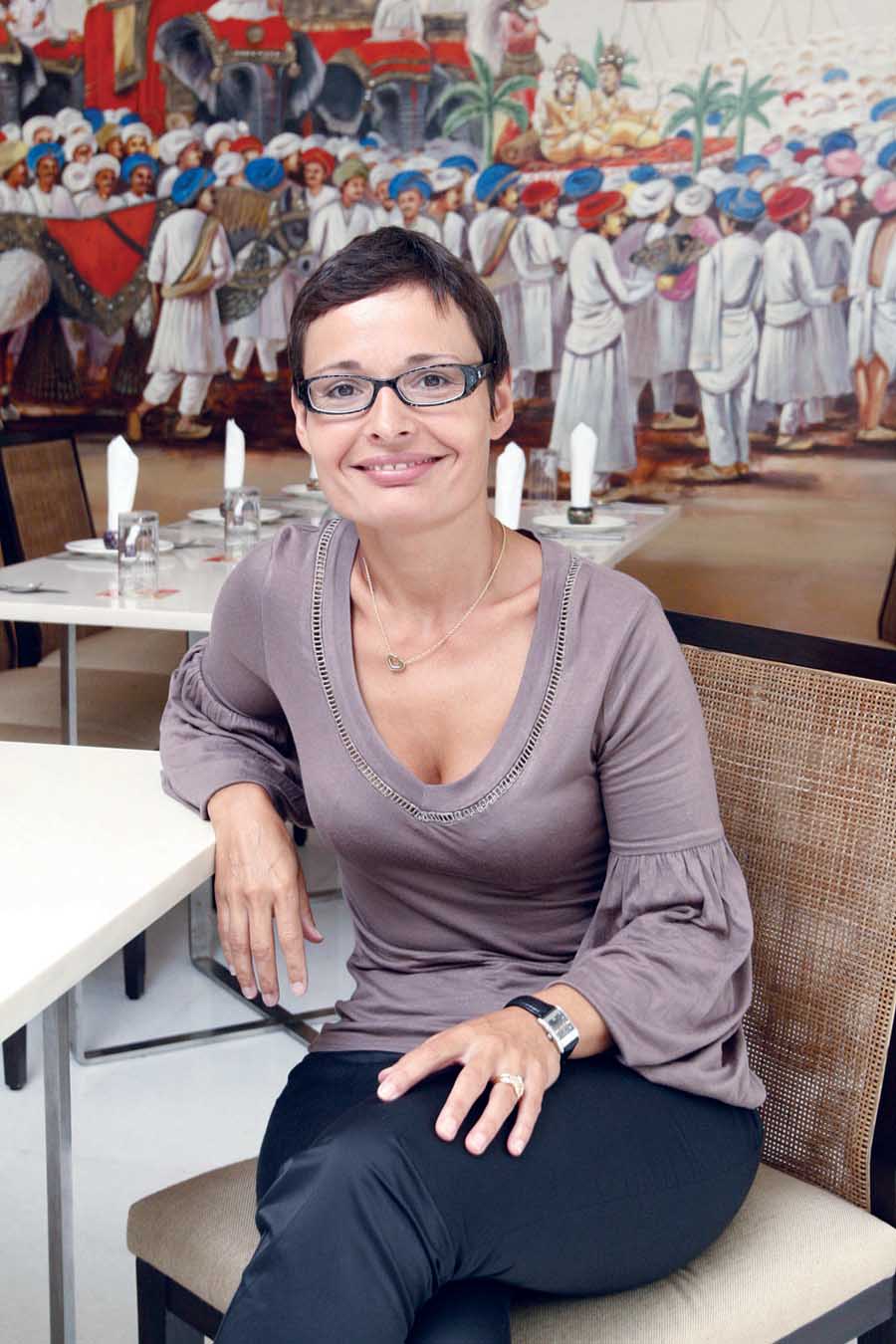
Lectra prides itself on offering factory audits before implementing any solution and these services are handled by Lectra’s team of cutting room solution experts and one such expert is Christine Gaussen associated with Lectra for past 10 years. On her recent visit to India, she shared her views on global best practices and implementing intelligent cutting room solutions in an exclusive interview with Team StitchWorld.
SW: The term ‘cutting room planning’ is used very loosely in the industry today, what all does it actually constitute?
Christine Gaussen: Cutting room planning “involves, efficient use of materials (marker planning, pattern engineering, fabric roll management), efficient use of machines (maximum utilization of spreader, cutter, labeler, etc.) and efficient use of the labour force. Lectra’s Optiplan software can prioritize and suggest optimum use of all above three”. Spanning the entire cut order process, it enables manufacturers to exercise complete control over the production process, from marker-planning, through marker-making, material estimation, and costing simulation to spreading and cutting, giving companies total visibility at each phase of industrialization.
SW: There are numerous products available in the market today that promise to increase process efficiency. What gives Lectra an edge over these other products?
Christine Gaussen: It is the Total Cost of Ownership (TCO) which is very very low. TCO includes not only the running costs, but also all other expenses associated with a machine, such as downtime costs, on a long-term period. This provides a grid of analysis which is linked to the savings it generates, allowing financial departments to calculate an accurate ROI.
[bleft]“Some fabrics need to be relaxed after spreading, we are looking in this direction and also we are constantly looking into developing products for different kinds of fabrics. For Indian fabrics like georgette and chiffon which are very flimsy and difficult to spread, we don’t have any separate machine models catering specifically to these fabrics but the machine models that we suggest to lingerie manufacturers who deal with such fabrics can be used for georgette and chiffon as well.” – Christine Gaussen Lectra’s cutting room solution expert[/bleft]
For example, One of Lectra’s key differentiator is our capability to cut pieces without any buffer or space in-between. Normally cutters need 2-3 mm space in-between pieces, but our cutters eliminate this need. This leads to a reduction in material consumption by up to 5%, compared to any other automatic cutter. This also brings 6% more productivity in the sewing process because of the precisely cut pieces. Lectra offers a return on investment of less than 18 months. Fabric is saved up to 5% and the TCO is reduced by 20% compared to any other system. This leads to a productivity increase by 15% to 100%.
SW: How does Lectra ensure more productivity?
Christine Gaussen: First of all, by laying fabric faster, then reduce idle times in linking CAD and spreader by radio transmitter, then in saving time in reading barcodes. Secondly, cutting more ply at higher speed, respecting a perfect quality, than any other product available in the market today. Proactive in maintenance, as already mentioned, is of high importance to increase cutter availability; think how much money you risk to lose if a cutter is not designed to alert before failure! Hours? Days? Even though our products might be more expensive, if the customer looks at the TCO for 2 or 3 years, our products emerge as the winners.
SW: What are the basic rules you follow while setting up or implementing solutions in a cutting room? What factors should be kept in mind?
Christine Gaussen: The first step is to audit the factory to understand its working and the pains that are being faced by the manufacturers on a daily basis as the idea is not to disturb the working of the factory completely but to take up improvements step by step. After auditing, we suggest the right mix of solutions along with optimization of the processes. Many a times a combination of both automatic with manual processes are feasible for the factory. The second step is to do a productivity study and the return-on-investment calculation. This is needed as we want to be sure that we have installed the right machines that will help the customers make savings and improve their productivity. Also the training is to be kept in mind as you do have to train well your teams if you aim at getting the most from the Lectra technologies you implement.
Most cutters only cut 50% of average knife running time and the reason for this is mainly to do with the management and organization of the cutting room. It may be because of the non-availability of fabric on time or bottleneck in offloading the parts whereas best performers can reach up to 75%. As a reference, in automotive industry this average reaches up to 85%.

SW: To optimize the cutting room, what solutions are very critical?
Christine Gaussen: Lectra offers the most precise and integrated methods, which is to make a rapid marker from the base size pattern file. Using the automatic lay plan calculation, accurate fabric consumption is made in just minutes, respecting the fabric constraints for each specific product. And in addition, our Vector cutting range achieves 3 goals simultaneously, not possible to attain by any other: The fastest cutting speed; the highest cutting height; and the highest degree of accuracy… even when cutting markers with zero buffer.
Vector is optimized to save your fabric when compared with all other cutting systems. Other cutting technologies must trade-off between speed, productivity and quality. With Vector, you can have the best off all three, for maximum performance.
We have a device known as Mosaic which has been developed for cutting matched fabrics, especially where distortion is present. Mosaic inspects the fabric using a high-resolution camera and repositions pieces in real time to address the fabrics with stripe, check or motif frequency variation. But it complements the single ply cutting system for small and medium run production systems. For cutting multiple layers of striped fabric, we have a system of laser point, where one can mark each corner of the marker and then the fabric is spread following the stripes preventing
any distortion.
SW: What are the various parameters on the basis of which the TCO is reduced by 20%?
Christine Gaussen: Our systems, and particularly Vector, have unique features which brings significant reduction on the TCO compared to other technologies.
The Lectra solutions offer savings due to its unique features which are:
- Our cutters are all equipped as a standard with the “energy saver” system. Result: 20% reduction on electricity fees have been observed;
- Blade saver is also unique: Sharpening pressure on the blade is digitally adapted to reduce wear to a minimum. The result: 20% longer life time than any others;
- The continuous bristle cleaner available on high ply cutters provides a 30% longer life to the bristles;
- The sharpening belts reduce 50% cost on sharpening;
- Low-cost consumables reduce running costs; and
- The smart maintenance system alerts before a failure occurs, reduces downtime by 1/10th compared to standard designed cutters.
SW: What are the critical areas where the Indian companies need to focus upon?
Christine Gaussen: Fabric consumption is a major focus area. To be able to anticipate the right consumption of the fabric and reducing the consumption will bring major benefits to the company.
The second is the lead time. Since the lead times are getting shorter, the Indian companies need to be braced to take this new challenge. They also need to learn to say no to some orders if it’s not possible to manufacture the order in the given time-frame. This will be respected more than taking up the unrealistic challenge and not delivering on time. The third thing I can suggest is that Indian companies need a more entrepreneurial approach. They need a vision to invest in the right kind of technology along with ROI calculations, to plan and manage people on a global level.