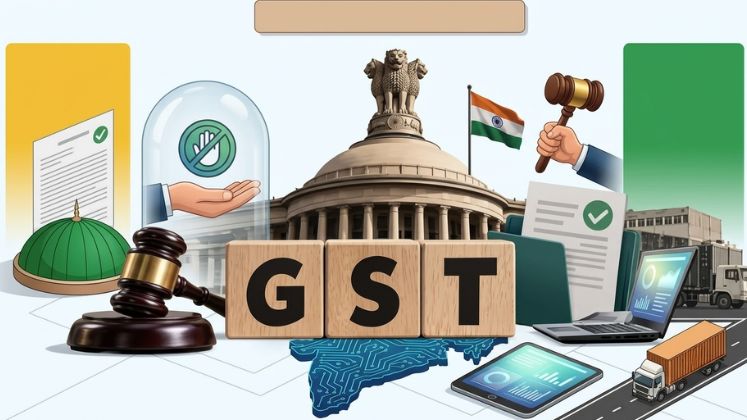
The GST Council has approved all process reforms, including proposals relating to registration and refunds, while referring to a committee the proposal to allow businesses to claim input tax credit (ITC) even when suppliers have not deposited the tax collected from them.
The decisions are part of a broader effort to simplify GST compliance, reduce the scope for criminal proceedings in tax matters and improve the ease of doing business under the indirect tax regime.
UP Finance Minister Suresh Kumar Khanna said after the Council meeting that arrest powers under GST laws had been removed and prosecution thresholds had been raised.
The removal of arrest powers under GST laws is a significant development for businesses, given long-standing concerns over the use of coercive enforcement measures during tax investigations.
Industry representatives and tax professionals have argued that the threat of criminal action can create uncertainty for businesses, especially where disputes arise from complex compliance requirements rather than deliberate tax evasion.
The move also comes against the backdrop of a wider debate on decriminalising economic offences and ensuring that criminal prosecution is reserved for serious violations rather than routine compliance disputes.
The change forms part of the broader effort to make GST enforcement more proportionate while retaining the ability to act against serious tax fraud and deliberate evasion.
Khanna said all proposals relating to registration and refunds had been approved. The measures are expected to reduce procedural delays and make compliance more predictable for businesses operating under GST.
Faster refunds are particularly important for exporters and businesses operating under an inverted duty structure, where the GST paid on inputs exceeds the tax applicable to output supplies. Delays in receiving refunds can lock up working capital and increase financing costs.
It has also approved refunds of accumulated ITC on plant and machinery for exporters and businesses operating under an inverted duty structure. Refunds will be calculated at one-sixtieth of the credit for each month, in line with the working life of the asset. The provision will apply to credit availed on or after April 1, 2027.
Industry bodies have welcomed these reforms. The Confederation of Indian Textile Industry (CITI) says the measures could improve liquidity and competitiveness for India’s textile and apparel sector.
The industry body has also urged the Government to rationalise GST rates on key man-made fibre (MMF) raw materials to eliminate the remaining inverted duty structure.
CITI Secretary General Chandrima Chatterjee said the reforms address a longstanding demand of the textile industry, as ITC on capital goods has remained blocked in manufacturers’ books.
She added that the changes, combined with faster GST refunds, could improve liquidity for textile units, particularly export-oriented businesses, and reduce the tax-related cost of carrying inventory and fulfilling export orders.
However, the industry body has called for further changes to GST rates on purified terephthalic acid (PTA) and monoethylene glycol (MEG), key raw materials used in MMF production. CITI said rationalising the rates on these raw materials would eliminate the remaining inversion and establish a tax-neutral MMF value chain.