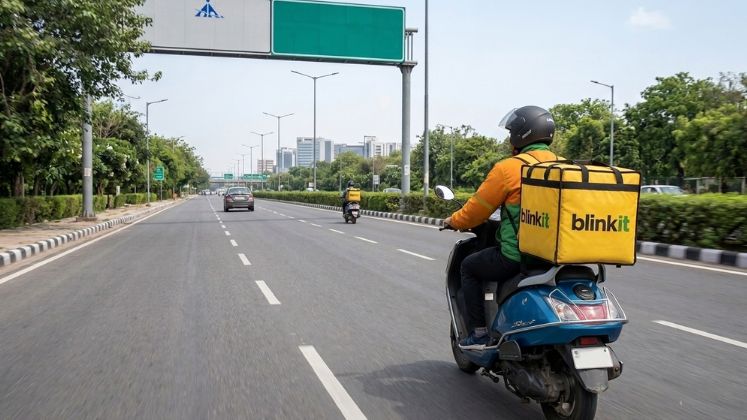
Blinkit remained Eternal’s largest business in Q1 FY27, reporting a positive adjusted EBITDA of Rs 102 crore. However, the quick commerce platform also disclosed that it lost around 1.8% of its net order value (NOV) to expired inventory, damaged goods, items lost during movement and theft.
Based on its quarterly NOV of Rs 17,132 crore, these inventory losses are estimated at nearly Rs 308 crore almost three times its quarterly adjusted EBITDA.
This is happening because Blinkit changed the way it does business. Earlier, Blinkit worked like a middleman, it just helped connect sellers and buyers and took a small cut. Now, Blinkit buys the goods itself and sells them directly, which is called an “inventory-led” model.
This change makes Blinkit’s revenue look much bigger, it grew 553% compared to last year, because now the full price of goods sold gets counted as revenue, not just the small commission.
Notably, this 1.8% number does not appear anywhere in Blinkit’s official, audited financial reports. It was only mentioned in the shareholder letter.
Meanwhile, Blinkit is also spending more money to build new stores. The cost of setting up one store has gone up from Rs 1 crore to Rs 2.5 crore.
Eternal Ltd. reported a 182% year-on-year increase in consolidated revenue to Rs 20,211 crore in Q1 FY27. However, net profit rose only 5% to Rs 92 crore due to higher tax expenses and continued investments in growth initiatives.
Blinkit remained Eternal’s largest revenue contributor, accounting for 77.5% of consolidated revenue. During the quarter, Blinkit added 200 dark stores, taking its network to 2,443 stores across India.
The company said it will continue investing in assortment expansion, geographic growth and supply chain infrastructure, including launching premium “gourmet” stores in select cities.