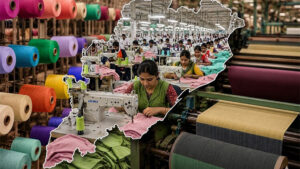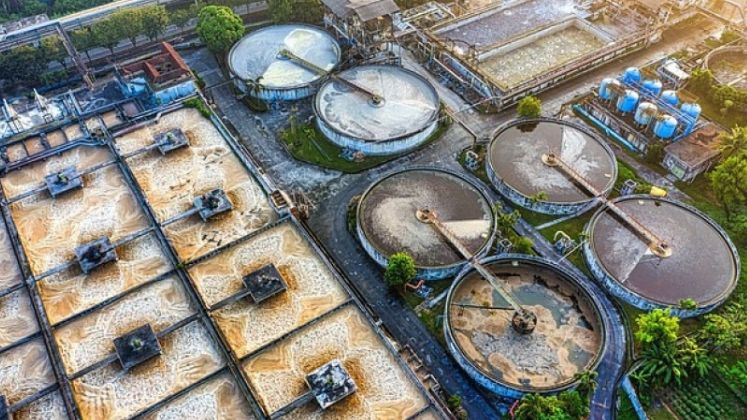
Industrial wastewater management in Rajasthan’s Sanganer textile cluster, located on the outskirts of Jaipur and known for its traditional hand block printing and textile manufacturing, is set to expand, with nearly all member textile units expected to be connected to the Common Effluent Treatment Plant (CETP) network following the completion of a pumping station at Brahmanon Ki Guwar in August.
According to official information, 758 of the cluster’s 892 member textile units have already been connected to the CETP. The remaining units are proposed to be linked after the pumping station becomes operational, allowing industrial effluent to be treated through the common network before disposal.
The Rajasthan State Pollution Control Board (RSPCB), along with the concerned implementing agencies, is executing the CETP expansion programme to connect eligible textile units to the common wastewater treatment system.
Rajasthan State Pollution Control Board (RSPCB) official stated that to meet the deadline, the progress of the CETP pumping station and pipeline project was inspected by additional chief secretary (forest and environment) Anand Kumar and secretary, department of environment and climate change (DoE&CC) Vijay N, who reviewed the ongoing construction works.
The project was reviewed during the third Raj Unnati meeting on March 28, when Chief Minister Bhajan Lal Sharma directed authorities to connect the remaining textile units to the CETP in a phased, mission-mode approach. It was reviewed again during the sixth Raj Unnati meeting on June 19, with instructions to expedite the work.
The pumping station and pipeline project is being implemented by Sanganer Enviro Project Development (SEPD), a Special Purpose Vehicle (SPV) formed by member industries. Construction was delayed due to proceedings before the Jaipur Development Authority (JDA) Tribunal but resumed after land permission was granted on June 21. Construction activities restarted on June 24.
According to officials several textile units currently transport wastewater to the CETP using tankers, but the arrangement is inadequate given the large volumes of water generated during textile processing, resulting in untreated wastewater reaching nearby rivers.