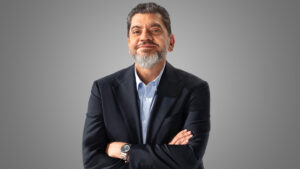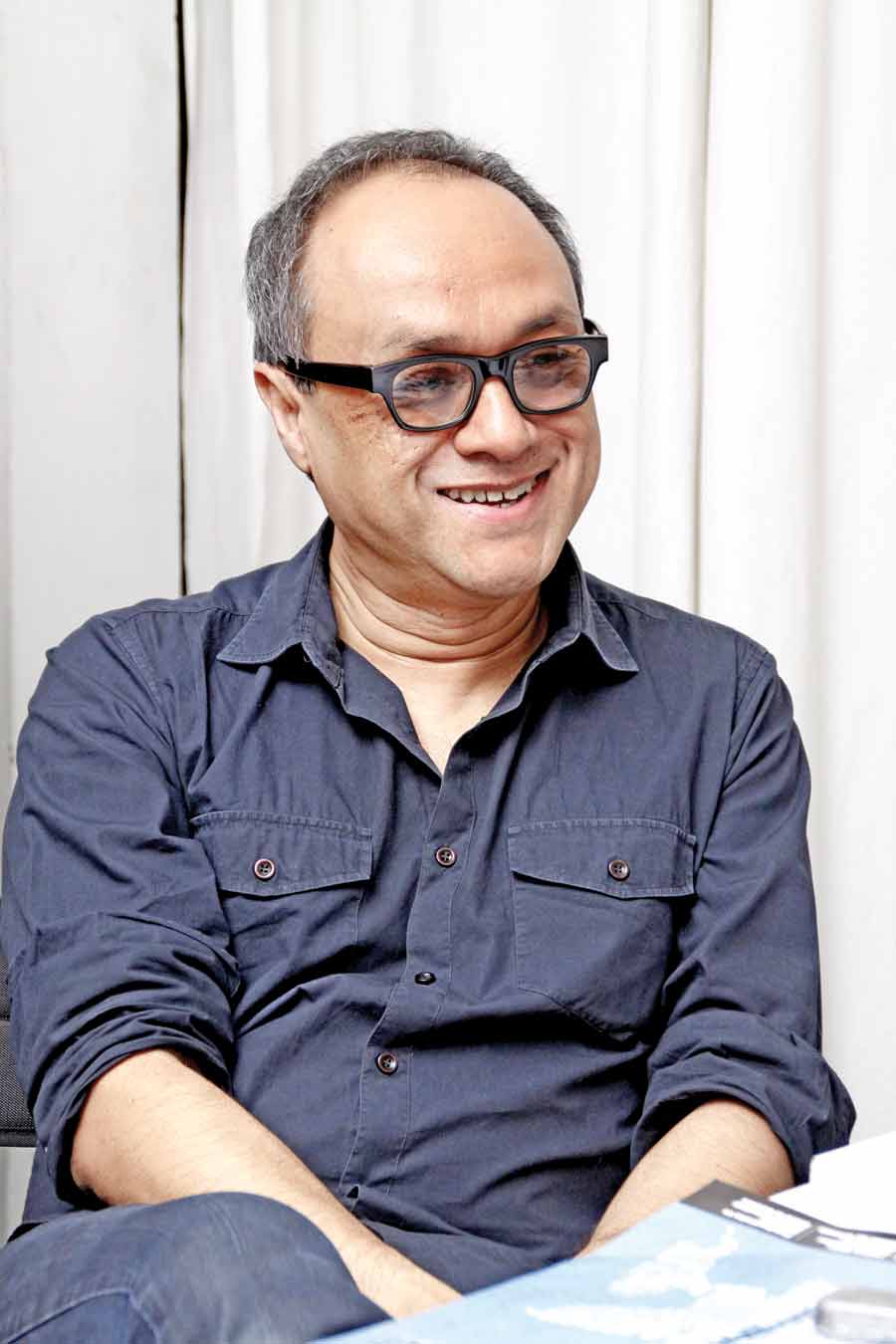
David Abraham and his work need no introduction… over the years his brand Abraham & Thakore has built a special place in the fashion world for its creativity and innovative developments in fabric. As a designer, David believes in handloom and handloom-friendly yarns like cotton and silks, which he engineers for originality. The bases of all his collections, which are shown to his niche market, both domestically and internationally are fabric developments. The collections are pretty much the same for both markets and the volumes, even for exports are small. “Our fabric is fairly simple, it’s quite strong in construction with a reduced sensibility, it’s the kind of handwriting which runs through all our fabric,” says David in a one o’ one interaction with AO’s Textile Team.
AO: How do you go about your fabric development?
David Abraham: We do our fabric developments six months in advance; our lead times are not as long as the larger manufacturers, as we work closer to the season. Suppose we are doing a fashion collection based on a particular theme, then the colour story develops from that and these colour forecasts are also made six months ahead. We use more or less the same colours for both the home and apparel division. Once the theme and its colours are sealed we start the developments on fabrics accordingly; we do some woven, some prints and some solids.
In case of weaving, most of the sampling is done on the handlooms for which we have a group of weavers with whom we work steadily through every season all over the country. We cannot do these kinds of developments in-house with the kind of quality that we need. It gives the flexibility to work with different weaves and constructions; for example, we can work with 100 singles in West Bengal, something that cannot be done in Delhi. Then we do a lot of Ikkats, double Ikkats and that can only be done by an Ikkat weaver.
Both my partner Rakesh Thakore and I are textile designers, trained from NID, hence how to weave is no mystery for us as we pretty much know what we want. We would start with doing about 40 metres for sampling and then depending on the type of garments that have to be made from it – sarees, dresses, shirts, etc. we decide the final length to be produced, however it’s limited to just about a few 100 metres.
With better communications, we do not even need to sit with them anymore to get the samples done. They are very sophisticated and we communicate through email images, Jpeg’s shooting back and forth, communicating over telephone; it all goes quite fast now.
AO: So you just use handlooms only?
David Abraham: We do power loom fabrics as well for certain products. But, for the key branded products which are our main focus, we tend to work mostly with handloom fabrics; firstly that’s something we believe in very strongly and as an Indian designer I believe that it is USP of India, if you are looking at the middle to luxury space.
AO: Which fibre do you prefer to work with?
David Abraham: We work more with natural fibres, a lot with cotton and silk; however we use viscose and blends too. Today, viscose is getting a lot of acceptability even with top-end brands like Prada. In traditional fabrics no one can beat India, but in contemporary fabric which is about technology, and which the Japanese, Italian or other European countries have access to, India still has to reach there. Indian manufacturers do not believe in R&D that much; we are still a country which likes to manufacture what others tell us to manufacture. Here manufacturers are not ready to take risk and if you have to develop something new you have to be very sure that either it would be accepted or it would be rejected. We don’t want to develop brands of our own; we believe in importing other brands and distributing it. The design community is quite small here and our textile industry is very short sighted; we have manufacturers and converters here but still we are nowhere on the world map with our own brands.
AO: Besides fibre quality what all construes a high-end fabric?
David Abraham: I would say the engineering of the fabric is what matters. Things which we can do on a handloom, we cannot really do on power looms or air-jets. We design the fabric according to what silhouette it would be cut into; most of the time the fabric dictates how we cut; every piece is engineered, say for example we created fabric for male collection on hounds tooth; every piece is engineered with a border; you plan and weave it in such a way that each piece can be cut separately and turned into a garment. It’s quite complex and very expensive to do and obviously it goes to a customer who understands.
We do a lot of engineering into the fabrics, working out the repeat size or we weave just the central panel of the front of a dress basically the pattern, so they had to weave the fabric with us and we were working on how to cut it so we only weaved it back and forth… so it’s a huge amount of engineering which goes into it and it costs a premium and that’s the reason why we want to continue to work with it.
Since we use a lot of handloom fabrics which is taken from saree weavers, the pick ratio is not strong enough to take certain structures, so that dictates the nature of the garment also like sizing, shape, etc. therefore, a final product has a very strong relationship with the fabric.
AO: Which all areas do you go for handloom weaving?
David Abraham: We generally go to West Bengal, Andhra Pradesh and Maheshwar. I know Varanasi is also a strong base, but somehow we found it very difficult to work with weavers there. It seemed to us that the weavers were inflexible; whereas the weavers that we work with are very flexible in developments. For example, when we did our last show here, it took us just about six weeks from the concept to fabric in double Ikkat. Our regular weavers do all the techniques from hounds tooth, screen printing, block printing, almost everything and it’s very easy to work with them because they know what we want as we have been working with them since a long time.
AO: How do you create value for your creations?
David Abraham: When we are doing our own collections, we tend to focus on higher price points. But, then we have to also move down the scale because we also do a co-branded line with Wills Lifestyle and are in the process of launching another line with a domestic chain, so if one moves down the price point, then obviously you have to dilute the fibre composition, adopt medium weaving techniques, move away from handloom and use it just for top-end products. We may sample and develop a design in block printing but when we start doing volumes and have to give a better price, we obviously move to screen or rotary printing.
AO: Handloom industry is really dying… poor weavers sitting in Barabanki (UP) or Jaunpur (UP) are weaving everyday gamchaas (towel size cloth to dry body after bath), they don’t even know that they can create very high-end stoles for the international market. How do you think they can be brought into the mainstream?
David Abraham: I personally think that ultimately in the long run handcraft in India will survive only if it’s targeted for the luxury space. I think the mass market, at the lower price point, is unviable for the maker who spends a whole day to weave one gamchaa and gets Rs. 50 for it. He should rather switch over to something else like even selling tea or should be just weaving one saree which would sell at Rs. 40,000/-. It’s very important that this segment is repositioned as ‘luxury’ to keep it alive.