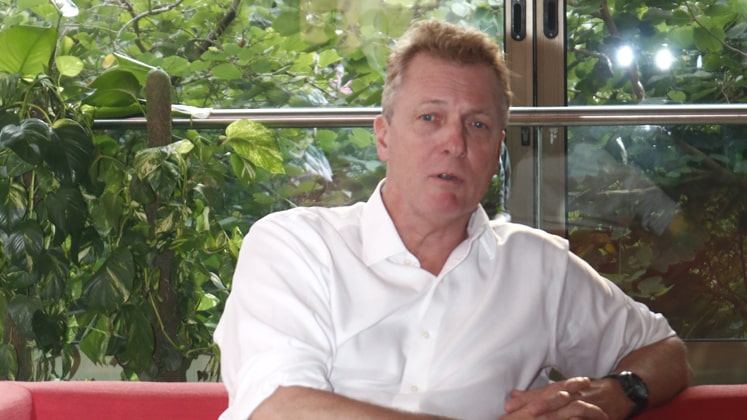
Tchibo, a company doing an annual business of around 3 billion euros, has an interesting history that makes it different from other retailers in many ways. Completing 70 years of its existence, the company initially started as a coffee mail order business and was the first such firm to combine coffee with selling of non-food items, now offering a larger variety of products including clothing, handicraft and furniture too. Thomas Linemayr – the CEO of the company, who is also a two-time Olympian for the Austrian Rowing team, finishing in the Top-10 in both the 1980 and 1984 Olympics – was recently in India. Apparel Resources had a short but candid discussion with him at Triburg Head office where he shared the growth strategy of the company as well as the sourcing experience from India.
Having more than 1,000 stores and 8,400 shop-in-shop locations around Europe with major share of stores in home ground Germany, Tchibo launches a range of products every week which it keeps in-store only for six weeks at the most. “We are not the cheapest but offer the best quality products at a fair price. We want to be always at the centre of people’s lives, bringing them little moments of joy. Therefore, we focus a lot on inspiration and we have a different theme every week. Our product range is very vast which includes a variety of apparel, running gear, yogawear, furniture etc. Due to this, we offer a wide array of different products and work on 14 to 12,000 different SKUs in a year,” averred Thomas.
A company with a conscience, Tchibo takes full ownership of its products and when selling under the shop-in-shop concept, does100 per cent consignment business, working exclusively on commission for space, business models. Thomas added that the positioning of the product in a shop-in-shop concept is very important for the company, and hence, they want to be fully in control of the space. Also having a strong presence as an online retailer, the website only sells the Tchibo brand, and is most probably the largest online mono-brand concept in the world.
“For me, CEO is also a Chief Empathy Officer because I have to motivate the team first and that is my biggest job and responsibility,” Thomas Linemayr, CEO, Tchibo
“For us, the product has to be 100 per cent reliable, relevant to the consumers and valuable in terms of quality and sustainability. Most of the thinking comes from consumer understanding as we are very consumer-centric, engaging in a lot of consumer research and trend research, to develop concepts/products that the consumer wants. Since we have so many stores, our store managers know what sells, so we have regular discussion with them and get a good feedback that becomes the foundation of our developments,” said Thomas, further adding, “We are not fashion per se; we are about high quality and sustainability. For us, being a sustainable company is at the core of our business and we would not compromise on that for anything.”

Besides sustainability, innovation is the focus for the company from day one, and even during the decade of 1950, its customers could choose between having their coffee packed in tins or sewn into pouches made of handkerchiefs or tea towels. The company has come a long way without changing its basic philosophy and today there are 300 people in the group working as heads of categories, product management team, QC etc., ensuring that the core values of the company remain intact. With offices in Hong Kong and Bangladesh, various teams cover 650 different sites producing for the company. In India, the company works in partnership with Triburg.
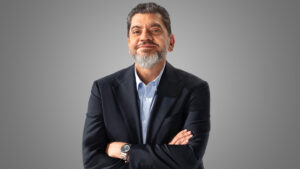
“When we started working with Tchibo, they were not very sure that they will get quality out of India as previously they were quite disappointed. In the last seven years, we fulfilled their expectations and gave a wide array of products to them in a quality that is appreciated by them,” Tarun Bakshi, CEO, Triburg
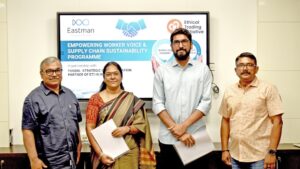
During his recent trip to India, Thomas visited some Indian facilities and was amazed to see the workers’ confidence. One of the facilities, which is supported by the company as a CSR effort, performed a skit for the team and it touched Thomas in many ways. “Transparency about human rights, working rights on the floor level, and forcing management to listen to their voices are really important things. Working on the shop floor is a high calibre job and with their play, they forced the owner to listen; this is a big signal. We encourage our workers to speak up because we believe in it and are passionate about this. It comes from the core values of the brand, so I think that this is a very important approach to create that mindset and attitude to produce changes.”
He further added that in India, people (workers) are speaking up which is a reflection of their immense confidence and courage. According to Thomas, it is really essential that people speak up and management listens. “It is the starting point of change. In many countries, there is a hierarchy and people don’t have the courage to speak up. It is great to see passionate people who fight for their rights and move their own life,” said Thomas, concluding on a parting note, “Goodwill is the biggest asset for us and one can’t compromise on it. We look for consistent, reliable quality which is produced humanly.”
Truly Sustainable
Tchibo is a sustainable company and it executes the same through various initiatives of the company. One of its perfect examples is its suppliers’ (manufacturers as well as wet processing units) names mentioned on its website.
Products made by sustainable cotton are also the focus for the company. One of its collections, Appachi Eco-Logic women’s collection, has been created by a completely transparent supply chain in India.