After one year of the first official nationwide lockdown, tension is again mounting as cases of Covid are again on the rise. All this has forced everyone to think and work amidst unprecedented challenges. Right from top-level management of apparel factories to workers on the shopfloor, all are worried but they are continuing to work.
In this scenario, workers are more worried as they are between the devil and the deep sea; if they remain in a metro city or an established apparel production hub, they are at risk of becoming Covid positive, and if they go back because of safety reasons, they will become jobless and will be forced to face financial crunch. And that too in a scenario when they are already under pressure of not having enough money due to past developments of Covid.
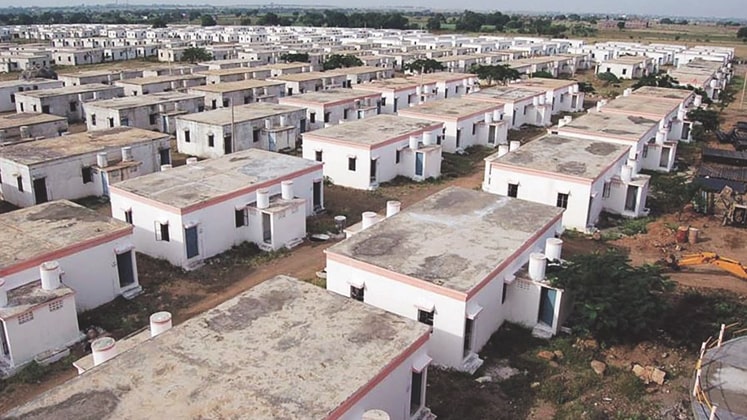
The most viable solution, which was in limelight last year also, is providing housing facilities for migrant workers as it will help them to get protected from Covid as well as it will prove to be a big support for them to save their money. Workers, especially in the absence of transport facility, are forced to use the cheapest mode of public transport and this creates a big risk for them.
On the other hand, time and again, it has been proved that a major share of the migrant workers’ earning goes towards arranging their housing which is most of the time not hygienic and has many other issues also.
It is a proven fact that one of the important factors that can prevent the permanent migration of labourers from apparel manufacturing hubs to their villages is the availability of adequate housing and hostel facilities. The construction of houses/dormitories with all required amenities with the support of the Central Government in clusters in collaboration with individual units is one of the best solutions.
The Report of the High-level Committee on the ‘Impact of Covid on Tamil Nadu’s Economy’ chaired by Dr. C. Rangarajan has recommended that the Government, through its various institutions, may also support Industrial Housing Projects through PPP models.
And this issue is equally important across the nation as industry everywhere is dependent on migratory workforce and states like Tamil Nadu and Uttar Pradesh, having major share in apparel manufacturing, have recently shown some movement in this regard.
In South India, time and again, Tirupur Exporters’ Association (TEA) has urged the Government to support housing for labour. TEA has sought a grant from the Government for the construction of one lakh housing for the migrant workers which will help to significantly reduce the attrition rate. A proposal regarding the same has been submitted through NITI Aayog.
“We need to take housing for labour with all decent amenities on a war foot measure to help the labourto have decent Dwelling Units (DU), as well as to live as a family and also help the industry to sustain its growth. By providing this facility to the labour, the entire family will get settled and thereby more working hands would be assured to the industry which has an ever-growing appetite because of the global opportunities and demand. If we get housing as per our plan, this will reduce the carbon footprint of 3 lakh km of bus transport per day as currently around 3,000 buses are being used by those who travel around 100 km per bus per day,” the association says.
Also Read: The only solution for immediate availability of labour in North India!
Efforts by various governments so far
The Union Government has various schemes to ensure the execution of its target ‘Housing for all by 2022’.
Last year in July, the Union Cabinet gave its approval to develop Affordable Rental Housing Complexes (AHRCs) for urban migrants and poor as a sub-scheme under Pradhan Mantri Awas Yojana – Urban (PMAY – U). According to the scheme, the existing vacant Government-funded housing complexes will be converted into ARHCs through Concession Agreements for 25 years. The concessionaire will make the complexes liveable by repair/retrofit and maintenance of rooms and by filling up infrastructure gaps like water, sewer/septage, sanitation, road, etc.
Also Read: Government supports migrant workers! Affordable houses approved
In the recent Union Budget, the Government has allowed the extension of tax holiday for one more year for affordable rental housing projects as it will support the migrant workers. To help migrant workers and to promote affordable rental, the budget also proposed to allow deduction under Section 80-IBA of the Act to such rental housing projects which are notified by the Central Government in the Official Gazette and fulfil such conditions as specified in the said notification.
In Tamil Nadu, besides facilitating accommodation for workers closer to the factories, industrial housing projects were prioritised. To promote ‘Industrial Housing’, the state supports the walk-to-work concept to decongest the cities and improve work-life balance. Industrial projects will be encouraged to develop accommodation and hostel facilities for employees within a 5 km radius of the work area. The State Government has taken the initiative to develop two industrial housing facilities to accommodate 20,000 workers to cater to the housing needs of five industrial parks in the Sriperumbudur belt. This shall be provided on a rental basis to the industry and its workers. Notably, Tirupur will be benefited from the Industrial Housing projects. These projects will be developed through PPP models.
Industrial Park developers will be eligible for an Industrial Housing Incentive of 10 per cent on the cost of developing the residential facilities developed within the Industrial Park over 10 years from the date of completion of the investment in the housing facility, subject to a ceiling of Rs. 10 crore.
Result on ground level
Apparel Resources explored three apparel manufacturing clusters – Tirupur, Jaipur and Noida in this regard and an altogether different scenario was found in each of them.
Raja M. Shanmugam, President,TEA told Apparel Resources, “In South India, the industry is working on multi-fronts in this regard like Pallavada Technical Textile Park has recently started the construction of around 500 houses and this project is expected to complete in next 6-10 months. Secondly, many apparel exporters here have now decided that rather than just focusing much on investing in plant and machinery, the need of the hour is to focus on best HR practices. The companies that will expand now will have a focus on housing for workers also. Such efforts can be a gamechanger for the industry.” He further added that the benefits of various government schemes are being taken regarding the housing project.
In Noida, Noida Apparel Export Cluster (NAEC) got the State Government’s support as Government is offering a flat of 2 rooms on a rent of Rs. 4,000 –Rs. 5,000 and 4 to 5 workers can easily live there but workers are not willing to stay in these factories. “Many exporters tried to convince the workers about the benefits of staying in these flats and even offered almost free of cost staying and bus facility but workers feel more comfortable to stay at nearby villages. Food at low price and habit of staying in nearby villages is something, workers don’t prefer to leave,” told Lalit Thukral, President, NAEC.
He further added that as now Covid cases are growing again, workers might agree to live in these flats. “We are hopeful that sooner or later, workers will understand the importance of living in an organised and hygiene place,” said Lalit.
On the other hand, in Jaipur, Rajasthan’s leading trade body Garment Exporters Association of India (GEAR) has given representations to the State Government from time to time but nothing happened on the ground level. Vimal Shah, President, GEAR said, “Factories are ready to pay whatever they need to pay as we know very well that if workers get comfortable dormitories, their productivity will also increase and we will have fewer problems be it absenteeism, worker attrition.”
On the condition of anonymity, few of the exporters also told that they have tried to arrange common lodging for their workers in the residential area but due to some reasons, which were out of their control, it couldn’t happen.
“Gutter pipe of our factory often got blocked and when I asked about this to my staff, I got to know that workers come early to the factory so they use the toilet here as they don’t have a proper facility for the same at their homes,” told an exporter on the request of not disclosing the name.
Companies themselves are taking initiatives
Irrespective of whatever the various State Governments are doing or not doing in this regard, few of the companies are doing good work as they have hostels and dormitories for their workers.
Companies like Indore-based leading apparel exporter Pratibha Syntex recently gifted houses to its 28 employees. Housing was always a major issue for the workers, even well before Covid. This fact was also highlighted in a three-year-old internal survey of the company that figured out that that many employees scripted a dream of owning a house.
Coimbatore-based KPR Mill which recently announced to hire 12,000 workers from Jharkhand has fully assured to take care of their food and lodging also.
There are many more such companies which have taken similar steps but looking at the scale of the industry, these efforts are miniscule and Government support is essential to scale up this need of the hour.