From Paris ateliers to Delhi occasion-wear, the cape is turning from a one-off flourish into a proper outerwear category.
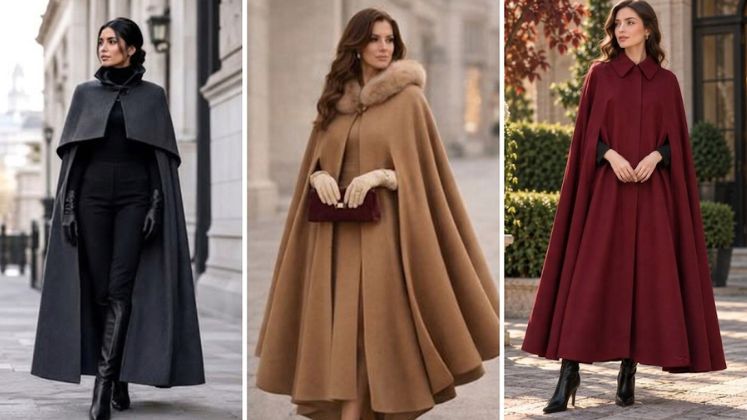
The scarf coat has had a long run, and the industry is now moving on to something more theatrical. Coats and jackets with the cape built into the cut give a soft, sweeping line without the fuss of a scarf slipping off the shoulders. Some versions are cropped to jacket length and others cascade down the body, often with high or fringed necklines. The shape ties into a wider return of opera-inspired, directional dressing, but one that doesn’t need an occasion. When a coat is the first thing seen for most of the winter, it makes sense for brands to treat it as the statement piece.
Retail has already followed, and the price ladder is wide. At the accessible end, Sézane’s Gabie Coat is £275, H&M’s Handmade Wool-Blend Coat is £170 and COS’s Scarf Jacket is £199. Anthropologie’s Wool-Blend Scarf Check Maxi Coat sits at £258, which shows the scarf-coat idea is still selling in the mid-market. Further up, Totême’s Scarf Doublé Coat is £1,180, and Róhe’s fringed scarf-detail wool and alpaca coat is £1,455. Totême’s bouclé wool cape coat is $1,220 at Saks Fifth Avenue. At the luxury end, Chiara Is has a $4,213 fringed-hem cape, and Khaite’s leather cape jacket is $6,800 at Bergdorf Goodman.
On the Fall/Winter 2026 runways, shrouds, capes and wraps were a focal outerwear trend. Givenchy, Khaite, Altuzarra, Fforme and Balenciaga all showed their own versions, and the silhouette combines a sense of protection and cosiness with a looser, more casual feel. Louis Vuitton’s A/W 2026 show featured voluminous coats, exaggerated shoulders and cocoon-like caped silhouettes. The cape is also reshaping the trench, long the safe transitional layer. Róhe’s double-faced cape trenchcoat sits alongside Burberry’s ruffled and embossed trenches in the reworked category. Across the season’s outerwear, capes are appearing with tactile fabrics, patchwork, faux fur and plaids, and they now rank among the season’s key outerwear trends alongside scarf coats.
Celebrity dressing shows the same drama. Meryl Streep wore a bow-detail flame soft-leather cape from Givenchy by Sarah Burton’s Fall/Winter 2026 collection, with long black leather gloves, at the New York premiere of The Devil Wears Prada 2. Jennifer Lawrence wore a sheer Givenchy gown by Sarah Burton, finished with a cocoon-like cape, to the 2026 Golden Globes. Dakota Johnson arrived at the Time 100 Gala in a Valentino fall 2026 gown with a floor-length cape fastened by jewelled neck detailing. At the Met Gala, John Imah wore a sculpted cape coat as part of a custom Charles Harbison look. On the front row, Nicky Hilton wore a cape trench to the Burberry show during London Fashion Week in February.
The cape isn’t foreign to Indian wardrobes. It already works as an alternative to the dupatta and sits over kurta sets, sarees and gowns. India’s winters are short and transitional, so brands can chase this silhouette in cropped, cape-cut or contrast-collar versions that double as evening or occasion wear, rather than heavy full-length wool. The same logic applies to trims, collars, capes and cropped jackets on plush-finish fabrics in the faux-fur story.
At the designer end, Anamika Khanna has long worked with capes, with a Draped Cape & Palazzo Set in her line and cape sets from AK OK. At Lakmé Fashion Week, AK|OK also showed structured blazers and coats with delicate motifs. Gaurav Gupta’s studio offers a silk cape in light champagne with an elongated drape, priced at INR 125,000. Retailer listings show Pankaj & Nidhi with hand-embellished capes and saree cape sets, and Nikita Mhaisalkar with a draped midi dress and cape set. Rohit Bal built a signature around the cape-style women’s jacket at India Couture Week 2017, and Manish Malhotra, Anamika Khanna and Rohit Bal have all been credited with popularising cape sarees. The cape category at Pernia’s Pop-Up Shop features Sonali Gupta, Rohit Gandhi + Rahul Khanna, Masaba Gupta and Anamika Khanna. Sanskaar by Sonam Dubal rounds out the couture set, known for velvet and embroidered winter jackets and capes.
Winterwear and craft labels are working the same shape in wool and heritage weaves. House of Kari’s Black Kashmiri Aari Woolen Cape is a 34-inch cape in cashmilon wool, designed to layer over kurtas, dresses or western wear. Bhuttico’s women’s collection includes plain Reversible Capes at Rs 3,500. Zamour’s Royal Jamawar Cape Jacket on Nykaa Fashion has a mandarin neck and button-fly closure. Prathaa’s black cape jacket has flared sleeves and a tie-up closure. Taroob has a dedicated capes collection and positions the cape as an alternative to a dupatta, over a kurta set or a saree.
At the accessible end, Brown Living sells a cape coat in 100 per cent hemp with azo-free dyes. Inweave’s faux-fur cape poncho is available on Nykaa Fashion, and the Delhi-based manufacturer Modarta offers a fine-wool cape coat with Kalamkari embroidery in free size for trade buyers. Among mass ethnic-wear players, Biba has seen cape styles in demand, though that data point predates this season. Ritu Kumar sits just next door to the trend, offering a faux-fur front-open overcoat through Myntra. It shows how occasion labels are working outerwear volume even where the cut isn’t a true cape.
For brands, the opportunity is practical. A cape is easier to size, layers over both Indian and western separates, and adds drama without a new base wardrobe. That makes it a low-risk way for domestic labels to add a statement outerwear piece to the A/W assortment.