The pandemic caused by Covid-19 and then the mitigation measures aimed at slowing the spread of the virus have taken a sharp economic toll on the retail industry worldwide while also directly affecting the supply, demand and daily operations of the overall retail sector. As a result of all these changes, the overall industry almost transformed with online retail segment receiving a major boost in sales, the way consumers shop changed, the way retailers operate changed and it became imperative for these brands to pivot in order to survive and revive.
Ashish Jain, CEO & Director, Von Wellx Germany, asserts, “The world has never seen such a collapse before. Pandemic has affected not just one but every industry. The sales dropped to zero for a span of 3-4 months since it was a complete lockdown. However, if we look at the positive side, the pandemic has indeed taught us a lot in terms of technology and how to maximise the benefits from minimum. As for the fashion designers, fashion houses and brands, they got ample amount of time to study consumers and sketched their plan for the upcoming years with regard to their collection and launches.”
Retail brands that adapted to the changing needs of consumers will recover more rapidly and will perform better than competitors and the challenge for these companies is to understand which customer patterns will endure over the longer term. Consumers of today have shifted from luxury to necessity and are looking for products that will serve their purpose of usage and at the same time will offer best of quality at a pocket-friendly price. They are more aware than ever right now and his/her interaction with a company will ultimately trigger an immediate and lingering effect on their loyalty for the brand.
Also Read: At Leisure in Athleisure: India Fitting in Global Apparel Market’s Biggest Trend
What’s changing?
In its 2021 edition of the report KNOW Your Consumer – What You See Is What You Get, Deloitte India laid a structured framework to thrive in the New Normal including a deeper understanding of the market segments, understanding nuances of the consumers they target and adopting an omnichannel strategy mapped to each consumer profile.
The pandemic has led to massive disruption and adoption of digital technologies is one change that has led to reduction in customer engagement in the current times. M-wallet transactions have increased at a CAGR of ~56 per cent, online retail sales have increased, number of online shoppers is expected to reach from ~100 million in FY ’20 to ~350 million by FY ’25 and in that, about 75 per cent internet users prefer content in local languages over English. Today’s consumer is actively seeking information, comparing products available and is taking informed decisions and keeping a tab on the changing consumer preferences and innovating to redesign the way they operate.
Akhil Duggar Jain, Executive Director, Madame, avers, “Automation has been a key component towards the revival of domestic manufacturing. Most retailers are migrating to online selling platforms. The pandemic encouraged the adoption of new buying patterns across all industries. Online traffic for some brands increased by 40- 50 per cent. Fashion and apparel brands now need to consider going online with their products as an absolute necessity to survive in the market. It will give us the competence to attract new customers and reach out to existing customers in a seamless manner. Technology has kept the demand for the apparel industry relevant. Digital look books are the new trends that are helping consumers to buy and try products within the safety of their homes.The shopping behaviour of consumers had temporarily changed but brands have been forced to change their product strategies to suit the changing demands of people. We have revamped and modified our online platform www.glamly.com and are offering personalised customer experience to our consumer base. With changing consumer information, preferences too go through a change. People are willing to spend approximately Rs.2000- Rs.4500 on an average for well-designed jackets, sweaters, long coats, tops, dresses, night suits, tracksuits and cardigans.” Madame has witnessed an upward trend in its online sales from 2-3 per cent to 8-10 per cent.

During the current times, it is imperative for brands in every industry to demonstrate empathy, trust and ensure safety of consumers. Besides building human connection, brands are now veered towards feature-rich personalised marketing as the primary way to improve engagement and loyalty.
“Consumers now choose online shopping for even their day-to-day necessities to avoid stepping into public spaces. Consumers prefer mobile-web ready online stores to native apps for their store, no contact delivery, online payments, etc. There has been an increase in the number of people that choose to interact with a brand or buy from them after seeing that they support a cause that is commonly shared. More than discounts, ‘cause marketing’ is what will drive more sales for online retailers. We are slowly adapting to these changes and we have seen a spike in sales and revenue,” maintains Ishaan Sachdeva, Director, Alberto Torresi.
Technology is the new enabler
Technological integration in the overall operating processes has significantly accelerated to compensate for store closures and the consequent reduction in customer engagement, during the current times. Consumers have become more digitally inclined and demanding at one end whilst becoming more health and socially conscious on the other. Retailers will need to adapt to shifts in consumer trends, build the resilience muscle and adopt digital technologies at accelerated pace to help them stay ahead of the curve.
Ashish Jain says, “We are working on multiple technologies to provide easy shopping to the customer, be it under areas of customer service and interaction, warehouse and operations management, retail sales and stock management. In footwear retail, stock management is the king and we are working out on a technological system which will remove the inefficiencies from the system and make the difference between online and offline disappear. We are also working out a technology for the size issues being one of the factors of exchange, which will help us in decreasing the returns in online retail.Consumers have never focused so much on comfort and health factors before pandemic, but they now seek to have products that are versatile.”
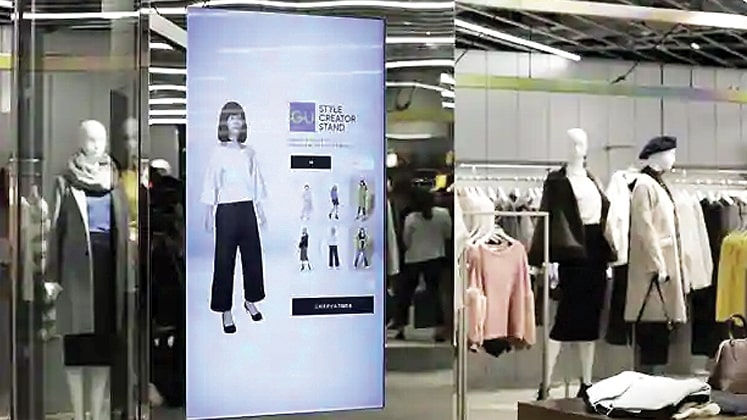
Some of the technologies helping enhance customer experience include Artificial Intelligence which maps consumer journey and helps brands and retailers find patterns across inconceivably large sets of data. According to Microsoft, by 2025, 95 per cent of all consumer interactions will be through channels supported by AI technology, then, Virtual Reality (VR) and Augmented Reality (AR), the most anticipated use of which in the retail segment is to help overcome the most notable shortcoming of online buying – trying before buying.
Voice assistants and chatbots too have become a necessity since consumers of today demand for 24/7 service and assistance. Fourthly, Internet of Things is the term used to describe the concept of connecting a group of devices to each other through the internet in a way that they transmit information amongst themselves. And lastly, location-based computing which helps retail brands reach out to consumers at specific location.
Akhil Duggar Jain asserts, “Digitising processes can enable improved visibility and provide real-time insights into the supply chain, giving people along the chain full control. AI-powered forecasting can reduce errors by 30 to 50 per cent in retail production. The improved accuracy leads up to a 65 per cent reduction in lost sales due to inventory out-of-stock situations and warehousing costs decrease by around 10 to 40 per cent. The new market will deal with integrated planning and execution, logistics visibility procurement 4.0, smart warehousing, efficient production management, autonomous and B2C logistics and prescriptive sales and expansion analytics.”
The way ahead
Customer behaviour and preference evolve over time, but the ongoing pandemic has created a revolutionary change in what the consumer of today wants and how they buy. In the days to come, convenience continues to be an important factor impacting the journey of the consumer and according to Deloitte’s Global State of Consumer Tracker, 73 per cent consumers are ready to spend a premium on convenience and this is further pushing online as also offline sales.
Ishaan Sachdeva agrees, “As a buyer, even I would love to pay an extra so that I can shop conveniently and avail all the benefits available. And brands are definitely offering premium benefits, discounts, doorstep delivery in a day or two or anything at a premium price. Shoppers/ consumers today are seeking comfort and they do not mind extra bucks for availing premium benefits.”